Daily grooming · 梳头养护
Gentle combing: hair care with a lighter touch
Understand the traditional language of scalp care, choose a comb that suits your hair, and keep grooming gentle rather than excessive.
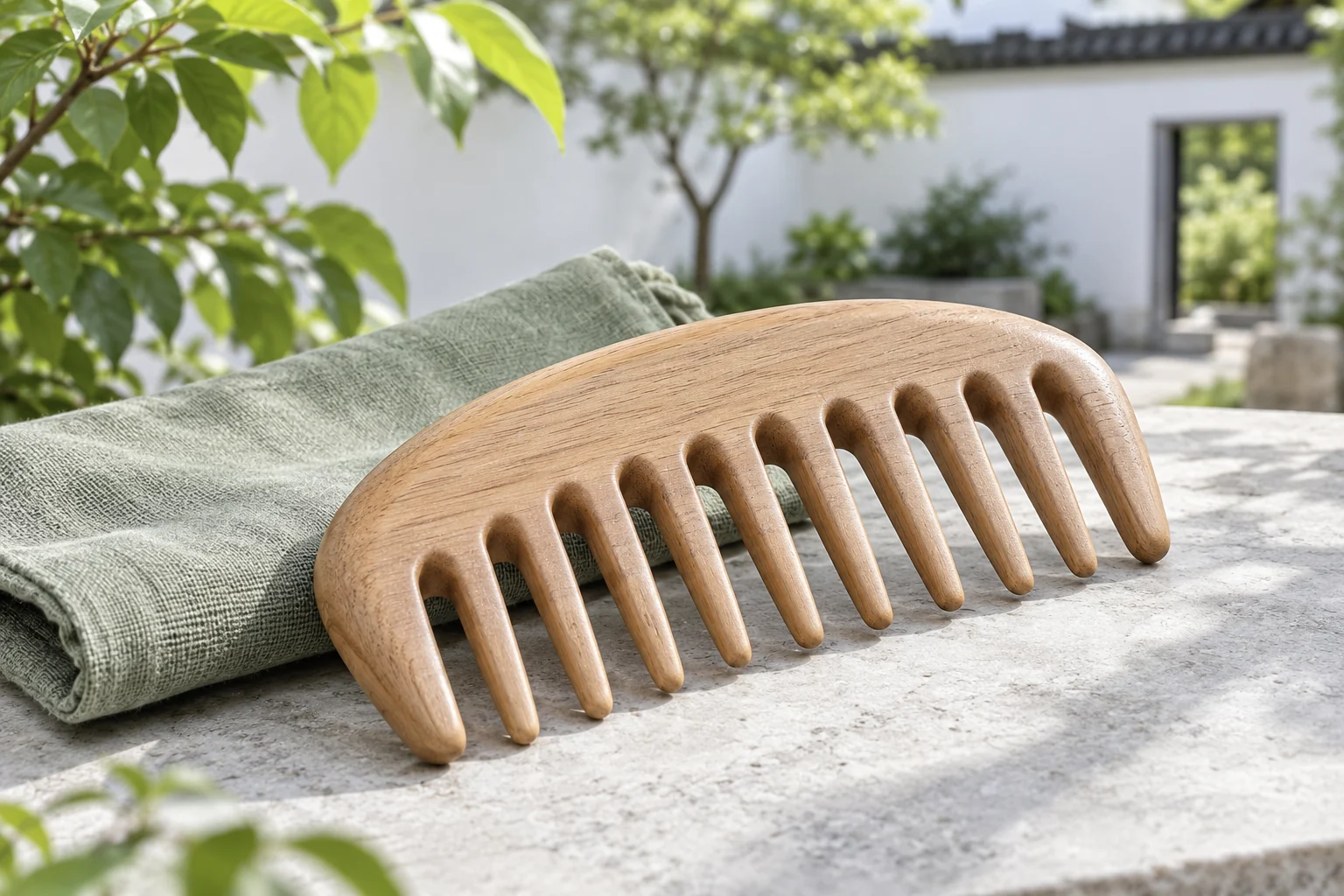
Where traditional scalp care fits
In Chinese self-care traditions, gentle stimulation of the scalp is often described using the language of channels, qi and blood, including “活血” (encouraging the movement of blood in the traditional model). This explains the cultural intention; it does not establish that our comb improves circulation, treats a condition or grows hair. The Neijing supplies a broad framework of measured daily care, not a product-specific promise for this wooden comb.
What a comb can usefully do
A suitable comb separates strands, helps with grooming and may make a short care routine feel more comfortable. It should pass through your hair without force. A wide-tooth shape is an option for detangling, but hair texture, density and styling needs matter more than a single “best” comb. If the teeth catch or scalp contact feels sharp, stop and change the tool or technique.
An everyday approach
Work through tangles gently from the ends before moving toward the roots, supporting the section rather than pulling. Contact with the scalp should be light and comfortable. Use only as much combing as grooming requires; repeated brushing is not an extra dose of nourishment. The American Academy of Dermatology warns that excessive brushing can damage hair. Wet-hair handling also differs by texture: tightly curled hair may need wet detangling, while many other hair types break more easily when wet. Choose a suitable tool for that routine.
Why we are considering pale maple wood
Our preferred sampling direction is pale maple wood, with beech as an alternative to compare. A light natural finish fits the clear daylight and modern look of our collection. Real maple combs are made by established makers, but that does not validate our unfinished design. We will confirm the exact species, stock selection, drying, finish, tooth smoothness and resistance to snagging. Good workmanship should support the value, rather than a claim that the wood is medicinal. The image shows a colour direction, not a verified wood sample.
When grooming is not the answer
Persistent itching, a painful or inflamed scalp, sudden hair loss or patchy loss needs appropriate professional assessment. Increasing the number of strokes does not solve those problems. Read our health help guide if you need support; use the comb as an ordinary grooming object, not a treatment.
Three ways to begin.
- Choose tooth spacing that moves through your hair comfortably.
- Detangle gently, supporting the hair rather than pulling on the roots.
- Keep the wooden comb clean and dry between uses; inspect for rough or damaged teeth.
Apply the idea
Does your comb pass through your hair comfortably, without pulling or scraping?
中文要点 · Chinese summary
梳头在传统养生语境中常以经络、气血和活血来解释,但这不等于证明某把木梳能生发或治病。日常价值是梳理、解开打结与舒适的护理节奏。浅色枫木优先打样,榉木作为备选,最终木种、干燥和涂层须确认;梳齿顺滑、圆润和齿距适配比“名贵木材”更重要。不是越梳越好,反复用力可伤发;持续头皮问题或突然掉发应求助专业人员。
Follow a related idea.
 Choose a tool for a defined use →
 Choosing materials: stainless steel and light woods →
 Align sleep and waking without sacrificing rest →
A word unfamiliar? Read the short glossary →
Contemporary editorial guidance about objects and gifts. No classical passage is presented as its authority.
Additional context: American Academy of Dermatology, Hair styling without damage.
Additional context: Holz Frank, maple comb material and finish (commercial example).