My thoughts keep going round.
The conversation you replay. Tomorrow’s work. A mind that will not clock off.
Huangdi Neijing · Everyday guides
A busy mind, a late meal, hours in the same chair. Find a place to begin, with everyday examples and a thread of traditional Chinese thought.
Not sure where to start? Find your reading path →
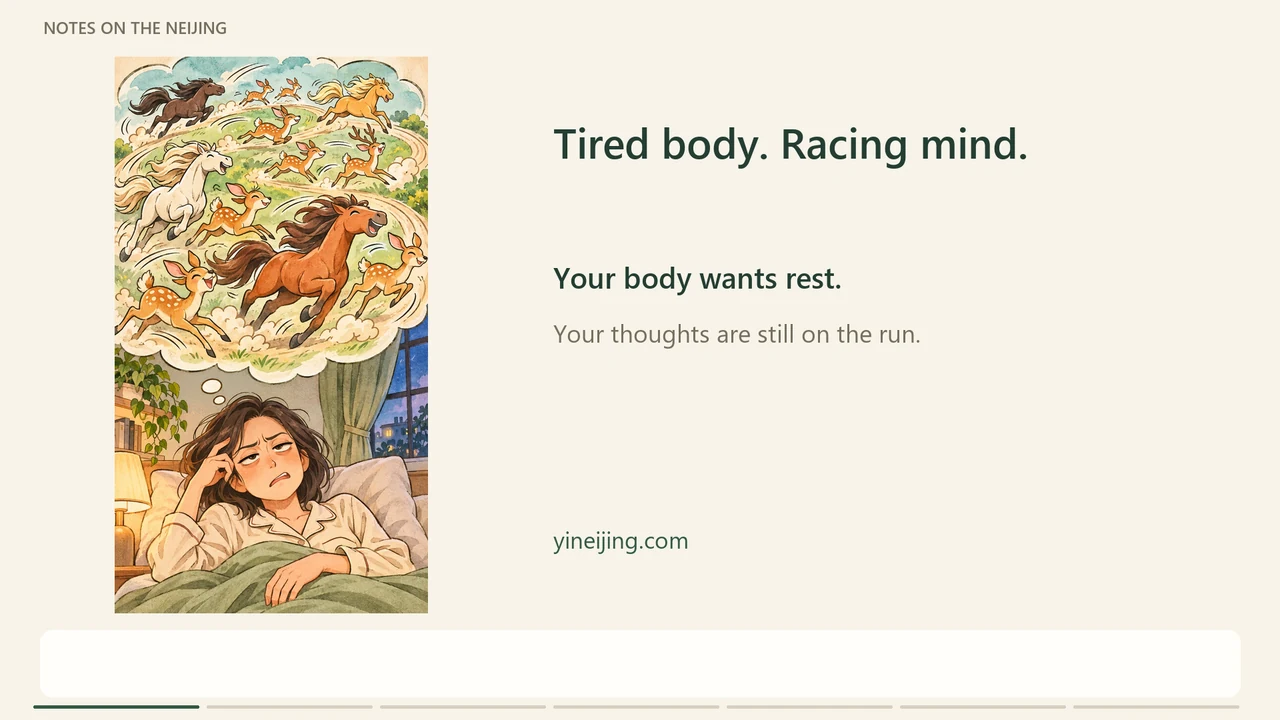 1 min 4 secBody tired. Mind still racing?See the feeling. Then explore it.
The conversation you replay. Tomorrow’s work. A mind that will not clock off.
Make room for a quieter evening and a rhythm you can live with.
Rushed lunches, late dinners, and finding a place for food in a busy day.
Try a few comfortable movements, with pictures to show the way.
Notice the daylight, warmth and pace of the season where you live.
Keep exploring
Browse a subject, or go back to the original words. Every guide stays here for you to return to.
Start with an ordinary day
Recognizable situations, something practical to try, and a classical thread to explore when you want it.
When small things set you off, start with the pressure underneath. Try a pause, one clear request and a repair that means something.
Replaying a conversation or worrying about tomorrow can fill the whole day. Separate a real task from a question that has no answer yet.
A full phone and a busy day can still leave you lonely. Begin with the kind of company, listening or mutual care you actually miss.
When every request becomes your responsibility, a clear boundary can protect both your time and your ability to care.
When a whole day feels too much, choose one manageable action that brings a little care, meaning or connection into it.
Grief can leave everyday life unfamiliar. Make room for what you feel, accept specific help and keep a few gentle supports around the day.
Try three Tai Chi Shibashi Qigong selections: commencing, opening the chest and cloud hands. Silent movement illustrations, key positions and a clear closing.
Explore three gentle Baduanjin adaptations with silent movement illustrations, numbered key positions and a clear finish: upward reach, drawing the bow and single-hand lift.
Explore brewed tea, goji berries and dong quai in Chinese daily-care culture, with clear ingredient identities, suitability and medicine-interaction notes.
Make a mild ginger drink or warm pear water with familiar grocery ingredients. Two simple kitchen options for an unhurried tea-time pause.

The practical reading map
Understand the Neijing’s main thread, connect it with everyday concerns, and choose a practical care direction.

Seasonal care · 四时调养
A practical guide to seasonal yangsheng: how the Neijing’s spring, summer, autumn and winter principles shape sleep, food, movement and emotional care.
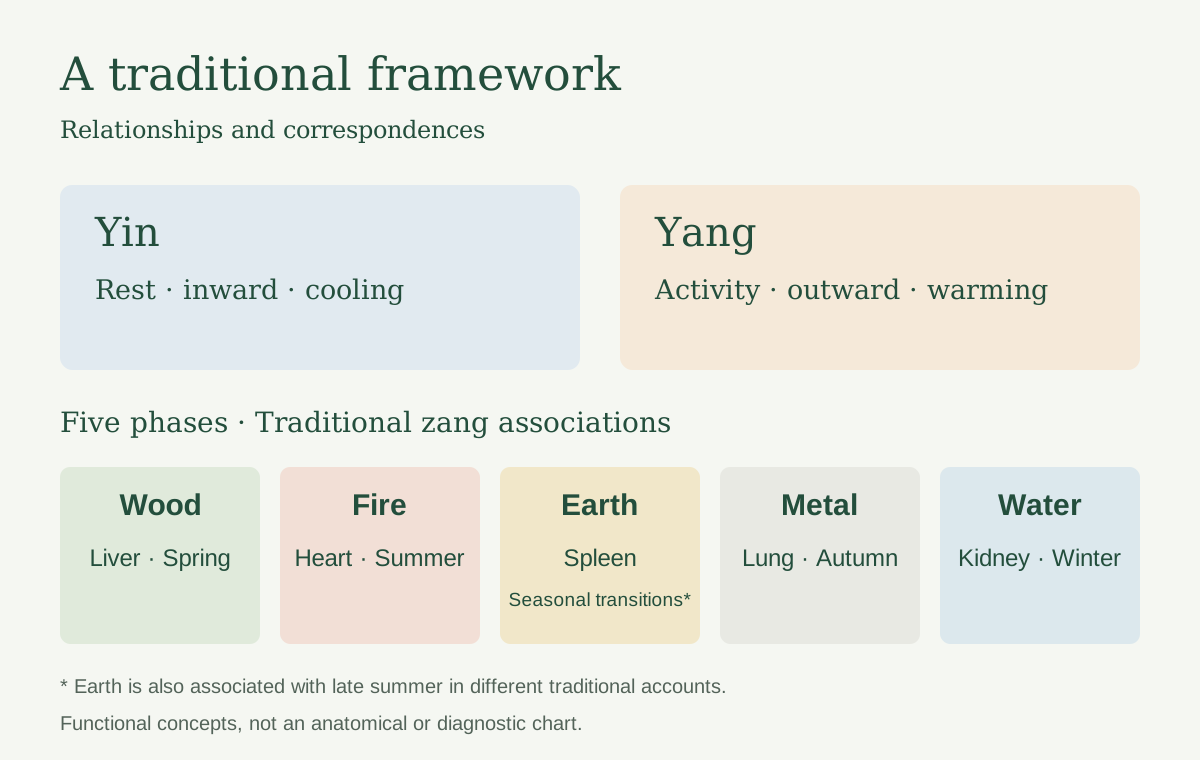
The theory behind care
Understand Wood, Fire, Earth, Metal and Water, their traditional organ and seasonal relationships, and how this framework connects with ordinary daily care.
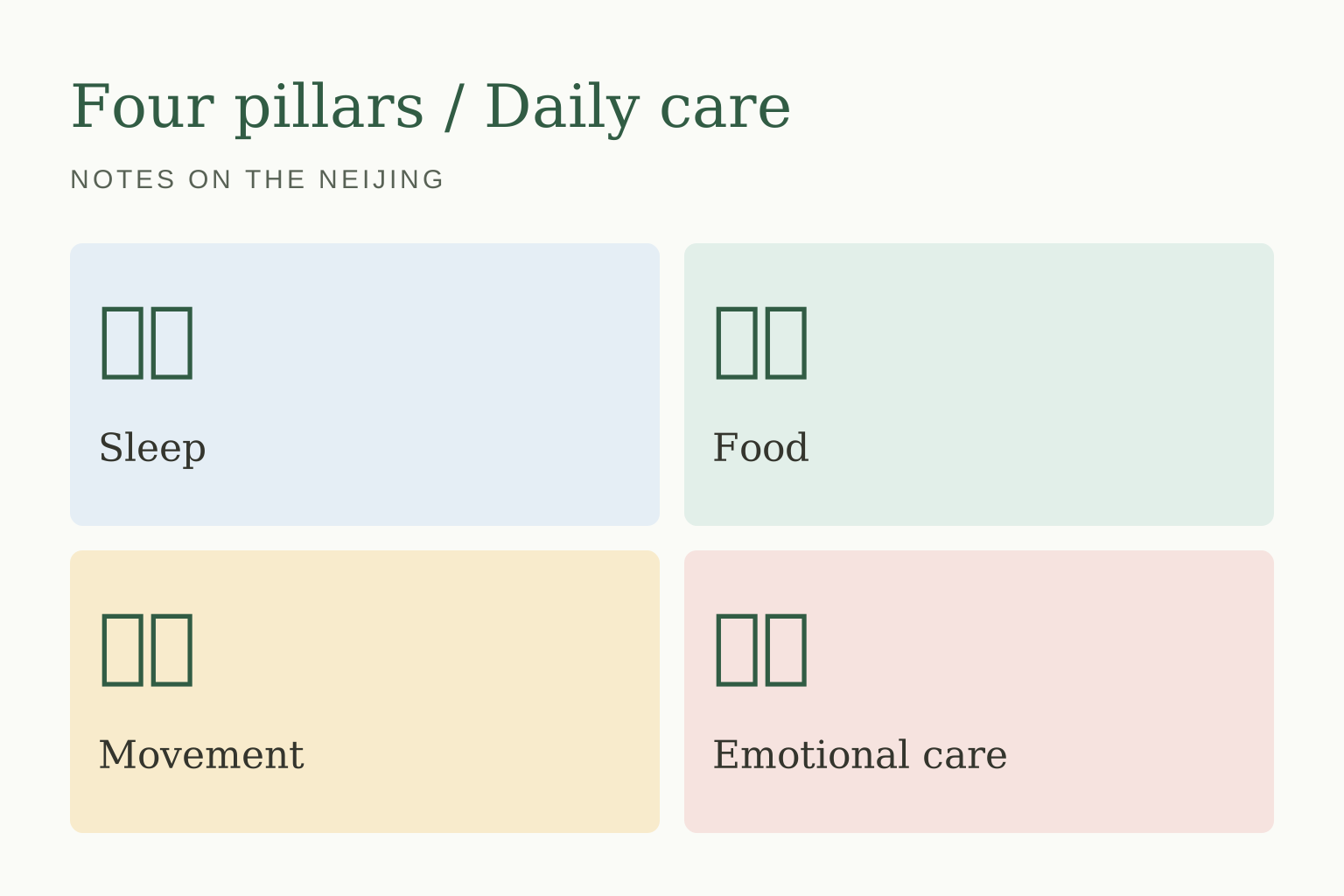
Practical reference · 从体感找调养方向
Sleep, cold sensitivity, digestive heaviness, dryness, tension and stiffness: understand the traditional care direction and choose a realistic action.
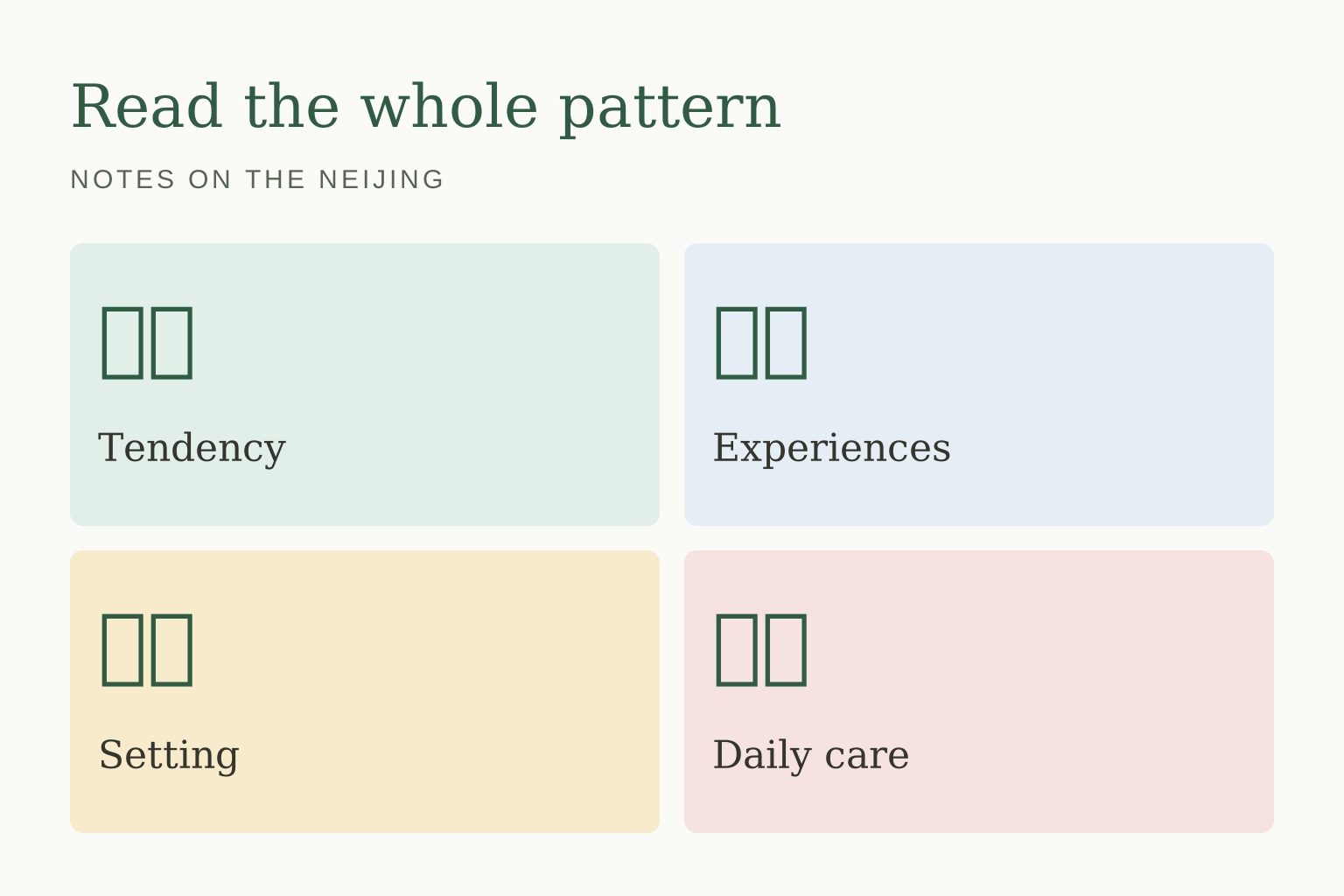
Traditional reference · 体质与辨证思路
Connect recurring combinations of experiences with qi, yang, yin, dampness and emotional regulation, using nine common constitution terms as a reference.
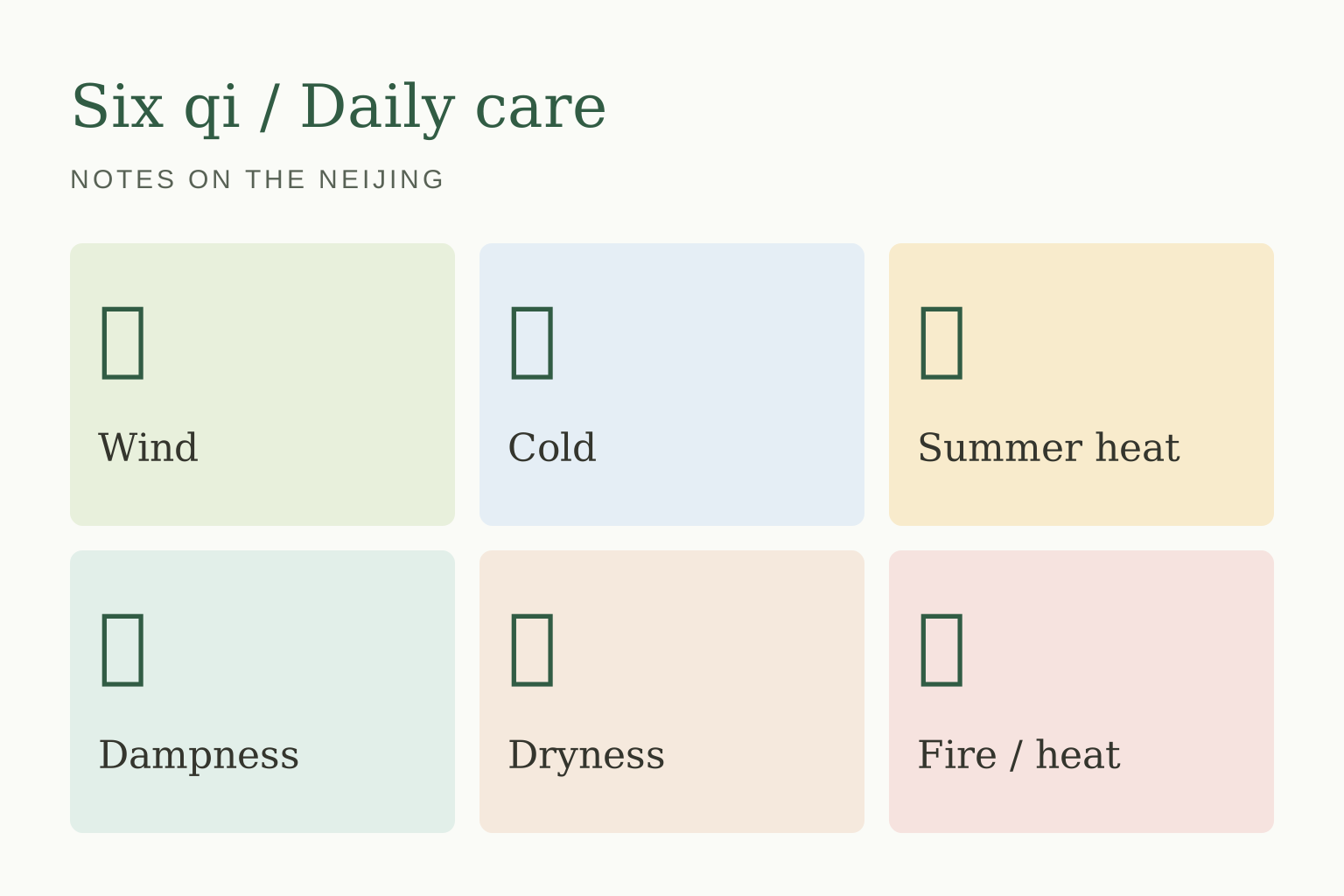
Traditional reference · 六气与调养
Read wind, cold, summer heat, dampness, dryness and fire, then choose a practical adjustment for your actual conditions.
Further reading · 五运六气
A clear map of the heavenly stems, earthly branches and traditional climatic correspondences, with the yearly cycle kept distinct from individual constitution.

Sleep & rhythm · 起居有常
Connect 起居有常 and the traditional settling of yin–yang with practical sleep, meal and wind-down habits.

Yang qi · 阳气
Understand the traditional warming and activating role of yang, then support it with suitable warmth, nourishment and measured effort.

Dampness · 健脾化湿
Understand the Spleen–Stomach and fluid framework, recognise the traditional dampness direction, and improve ordinary meal and activity habits.
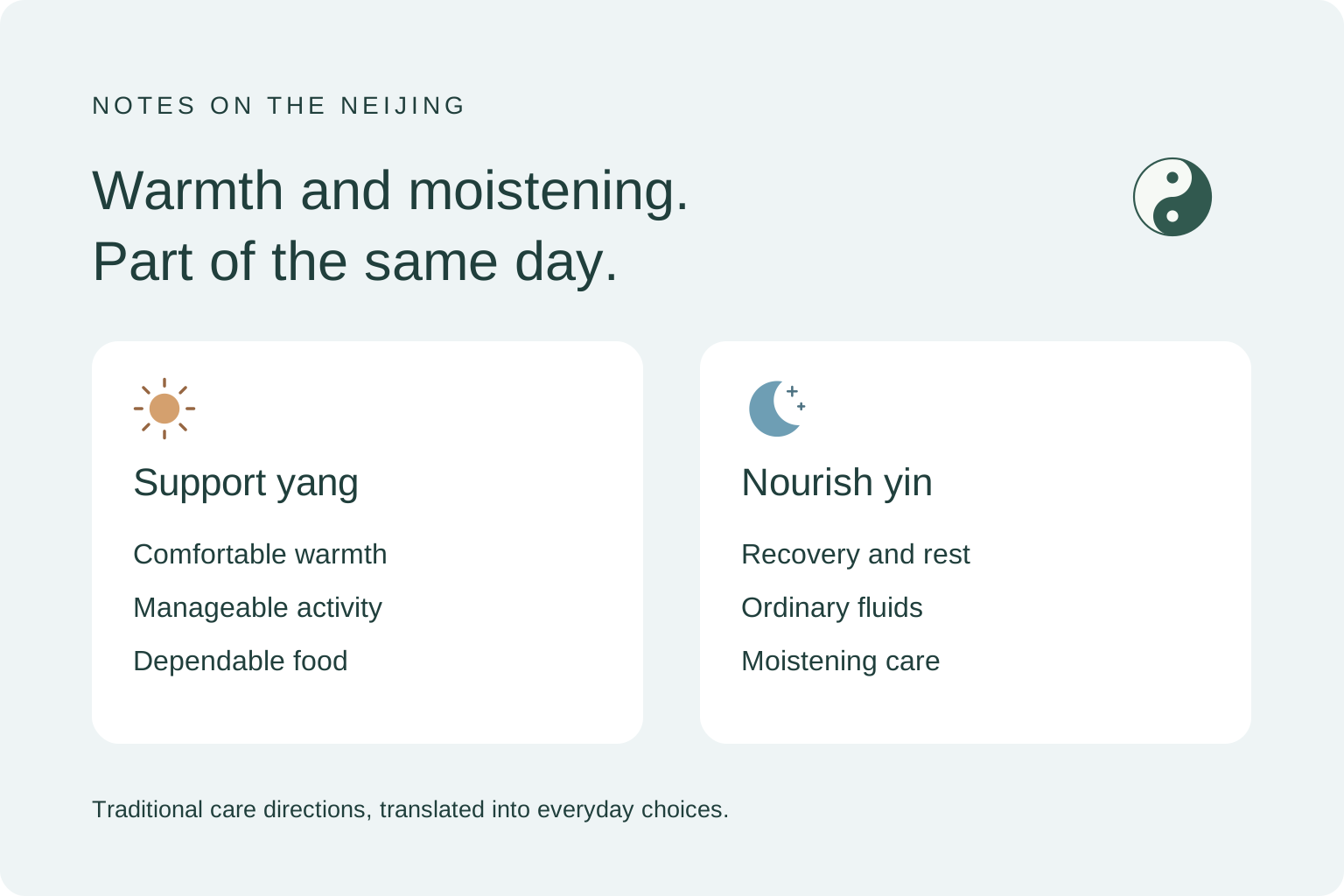
Moistening · 养阴润燥
Yin and body fluids bring nourishment, moistening and rest into the traditional picture. A heated room, skin-care habits and persistent mouth dryness call for different first steps. Choose the everyday situation that fits.

Movement · 动而有节
Apply measured effort to walking, mobility and ordinary activity, with recovery as part of the routine.

Food · 食饮有节
Use the Neijing’s food-group and five-flavour principles to make varied meals fit the season, digestion and everyday life.

Mind & emotions · 调神
Connect 调神 and the regulation of qi with emotional demands, supportive company and quieter daily transitions.

Seasonal care · 春 · 生
Let activity and intention grow gradually. Apply the seasonal emphasis to rest, food, movement and emotional care.

Seasonal care · 夏 · 长
Support flourishing; protect fluids and rest. Apply the seasonal emphasis to rest, food, movement and emotional care.

Seasonal care · 秋 · 收
Gather a steady rhythm; care for moistening. Apply the seasonal emphasis to rest, food, movement and emotional care.

Seasonal care · 冬 · 藏
Conserve recovery; keep warmth and gentle movement. Apply the seasonal emphasis to rest, food, movement and emotional care.

Tools & suitability
Understand how to assess everyday-care tools and why product facts, intended use and suitability should be reviewed separately.

Gifts & shared culture
Begin with a recipient’s interests, language, and everyday setting—not a promise to change their life.
Traditional care reference · 中医调养参考
Connect an everyday concern with a traditional explanation, then choose a practical change in sleep, meals, movement or emotional care.
New, severe or persistent symptoms? Find the right kind of support →