Food, culture & everyday care · 茶与食材
Chinese tea ingredients: know what is in the cup.
A cup can be a pleasant pause in a crowded day. Before choosing a familiar-sounding Chinese blend, look at the ingredients, how it is prepared and whether it fits you.
Updated
Recognise an everyday moment
A rushed meal. A little more room to eat.
Keep the focus on pace, variety and the setting. These scenes show everyday choices you can adapt.

Eating while work continues
It can be difficult to notice pace, hunger or fullness while attention is elsewhere.
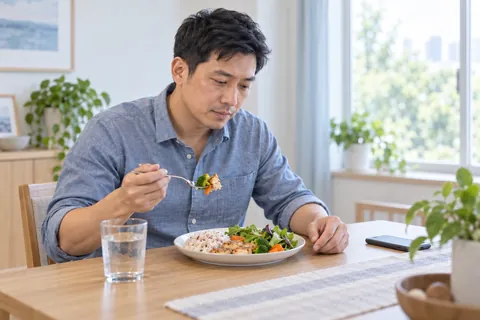
A meal with your attention
Sit down where possible, put the task aside and choose an amount that is comfortable for you.
AI-created scenes illustrating everyday choices.
Start with the ingredient, not the promise
In everyday Chinese conversation, “tea” can mean tea leaves, a fruit infusion or a combination of herbs. These are different things. A green-tea leaf, a dried goji berry and a slice of dong quai root do not become interchangeable because they appear in the same teapot.
Yangsheng brings food, rest and daily rhythm into the same picture. We use that idea here to make an ordinary pause more thoughtful. Ingredient choice still needs to account for medicines, allergies and personal circumstances. This is a knowledge guide; the site has not launched a tea product range.
Tea leaves · a daytime choice for many people
Green, black and oolong tea come from Camellia sinensis, processed in different ways. Brewing the leaf produces a beverage; taking a concentrated extract is another exposure. NCCIH’s green-tea guide notes that green tea contains caffeine and that extract supplements have different safety concerns.
If you are sensitive to caffeine or trying to make evenings quieter, keep tea earlier in the day or choose a caffeine-free drink you already tolerate. Follow the packet’s brewing instructions. “Natural” and “decaffeinated” are not guarantees that a drink suits every person or every medicine.
Goji berries · 枸杞子
Goji, also called wolfberry or gou qi zi, is a fruit used in Chinese cooking and traditional preparations. Species found in the trade include Lycium barbarum and Lycium chinense. Dried berries, juice and concentrated extracts differ; a label should identify what you are buying.
The red berries can add colour and a fruity note to food. Their traditional associations are part of Chinese food culture, while evidence for treating chronic disease remains limited. Memorial Sloan Kettering’s lycium monograph reports raised anticoagulation measures in people taking warfarin after lycium products, and allergic reactions in some people with food allergies.
If you use warfarin or another anticoagulant, leave goji out unless your clinician or pharmacist has checked the combination. A small-looking berry is still an ingredient worth mentioning. People with relevant food allergies should also check suitability. We give no goji treatment dose or symptom-based formula here.
Dong quai · 当归
Dong quai, or dang gui, is the root of Angelica sinensis. It has a substantial place in Chinese herbal traditions, often within practitioner-selected combinations. That history does not make it an everyday tea for everybody.
Memorial Sloan Kettering’s dong-quai monograph describes bleeding concerns with anticoagulants and advises avoiding it during pregnancy and breastfeeding. It also flags hormone-sensitive conditions for professional discussion. Its evidence for menopausal symptoms is not conclusive.
For these reasons, dong quai stays outside our simple drink recipes. A cultural ingredient introduction is useful; an unassessed “balance your hormones” blend is a different proposition. If a practitioner recommends it, share the exact product and your medicine list with the professionals involved in your care.
Read a blend in five quick checks
- Identity. Find every ingredient, the plant part and whether it is a food, powder or extract. A poetic blend name is not a full ingredient list.
- Preparation. Read the serving and brewing directions. Avoid combining several strong products simply because each has a reassuring description.
- Personal fit. Check allergies, pregnancy or breastfeeding, medicines, and any restrictions already given by your care team.
- Quality. Look for a traceable maker, batch information, storage instructions and a useful contact. An attractive package does not establish testing or certification.
- Purpose. Choose a flavour and a workable moment in your day. Promises to cure insomnia, repair a named organ or replace treatment need more than a cultural story.
The NHS guide to herbal medicines explains medicine interactions and individual suitability. A pharmacist can check the exact ingredients alongside your medicines; keep the packet rather than relying on a remembered name.
Bring the idea back to daily life
Put a cup beside an ordinary meal, a short break or a conversation with someone who makes you feel at ease. The useful part may be the dependable pause rather than an elaborate mixture. Start with familiar grocery ingredients and a comfortable drinking temperature. Our simple ritual offers two kitchen options without assigning a drink to a Five Phase or a diagnosis.
Sources and teaching context
- NCCIH: Green tea, caffeine and extracts
- Memorial Sloan Kettering: Lycium / goji
- Memorial Sloan Kettering: Dong quai
- NHS: Herbal medicines and complementary therapies
Source check: 20 October 2026. English explanations, short practice choices and adaptations are our editorial work. These pages have not received an individual clinical or movement-instructor assessment.