Food · 饮食有节
Eat with the season; keep the meal balanced
Read food variety and five-flavour harmony together, then build a familiar meal around them.
五谷为养,五果为助,五畜为益,五菜为充。素问 · 藏气法时论

A present-day application
One step to try today.
- Your situation
- A busy day that makes meals irregular
- Try this
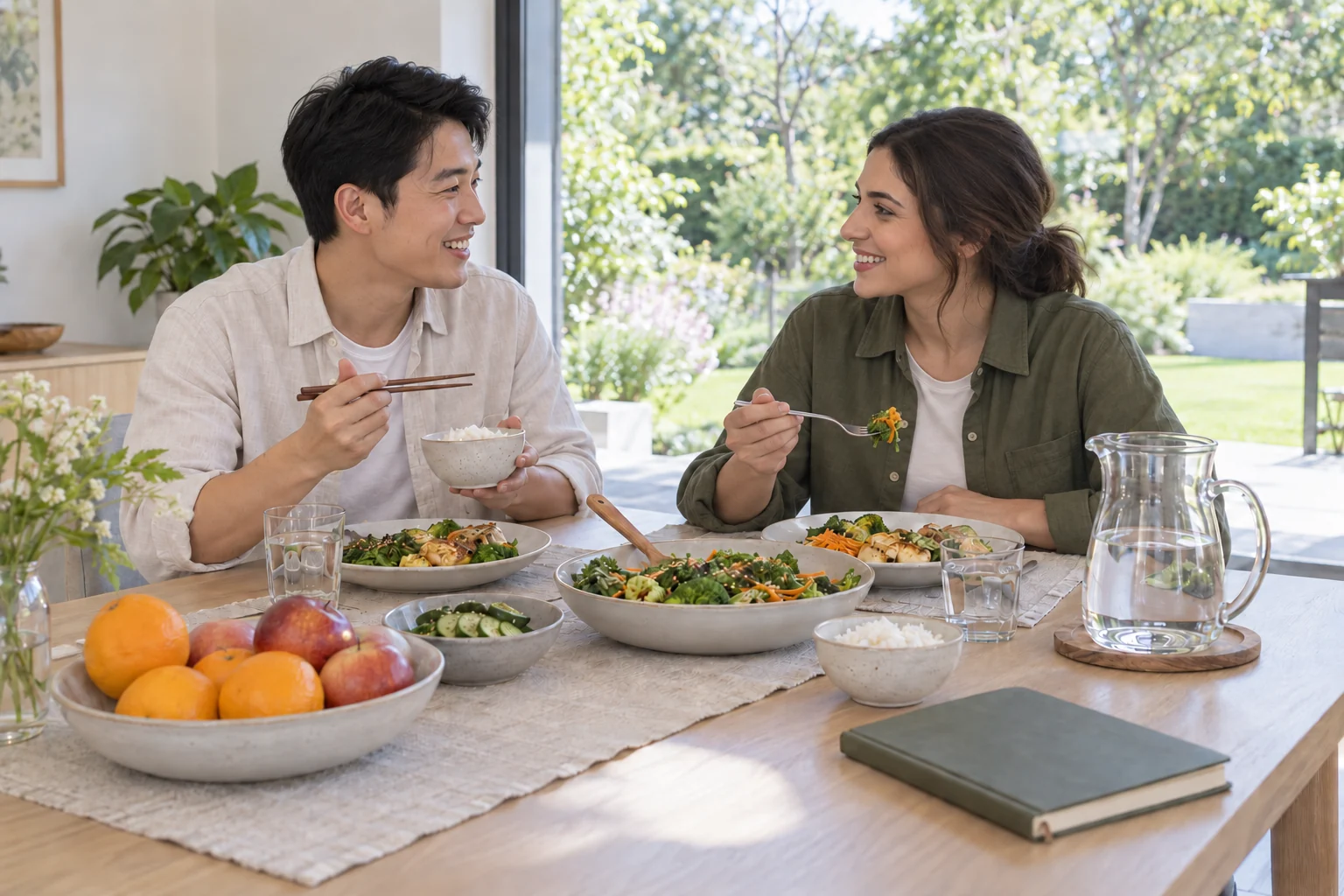
- Plan one familiar meal: a staple, vegetables, and a suitable protein source. Use foods that fit your preferences, allergies, budget, and any prescribed diet.
- Review gently
- Ask what made that meal easier to prepare and eat. Repeat the helpful part; there is no need to buy a seasonal supplement to begin.
An adaptable daily-life example, not an individual treatment plan.
Classical anchor · 素问 · 藏气法时论
五谷为养,五果为助,五畜为益,五菜为充。
Editorial translation
Grains nourish, fruits assist, domesticated-animal foods supplement, and vegetables provide completion.
Meaning in context. The passage describes food groups together in the historical food world. It invites a varied food pattern rather than elevating a single ingredient into a cure.
Application today. Build a familiar meal around a staple, vegetables, and a suitable protein source. Vary choices over the week according to preference, access, and dietary needs.
Reading limit
These categories are not modern nutrient ratios or a requirement to eat animal foods. The meal example is a contemporary application.
Classical anchor · 素问 · 生气通天论
是故谨和五味。
Editorial translation
Therefore, take care to harmonise the five flavours.
Meaning in context. The five flavours are sour, bitter, sweet, pungent, and salty. The surrounding discussion treats flavours as capable of nourishing but also of causing harm through excess in the traditional account. The point includes moderation, not only correspondences.
Application today. Avoid making one strongly flavoured food or drink the centre of every meal. Keep a varied pattern without attempting to “treat an organ” by taste.
Reading limit
Five-flavour theory is not interchangeable with modern nutrient science.
Food categories, not a cure chart
The Neijing’s grain, fruit, animal-food, and vegetable categories place food within its historical account. The five flavours belong to traditional correspondences; a flavour does not tell you which anatomical organ needs treatment.
An ordinary meal to start with
Use a familiar staple, vegetables, and an appropriate protein source; keep variety across the week. Beans, eggs, fish, meat, or other suitable foods can fit different preferences. This is a modern editorial meal example, not a classical formula. Respect allergies, religious choices, budget, and any prescribed diet.
Use harmony at the table
An everyday example is a familiar grain or other staple, vegetables, and beans, eggs, or another suitable protein. Rotate ingredients you enjoy. If one sweet drink or intensely salty food dominates the day, change that repeated pattern before searching for a medicinal seasonal recipe. Classical flavour theory and modern dietary guidance remain distinct.
Adjust preparation rather than promise a cure
A warm cooked meal may be comfortable in cold weather; convenient lighter meals can suit a hot day without abandoning nourishment. No season requires everyone to avoid chilled foods, eat one medicinal ingredient, or fast. Soup, ginger, and pears may be foods you enjoy; they do not automatically treat a pattern.
Separate food from medicinal products
Concentrated herbs, powders, and “dampness teas” need more than a recipe story. Check ingredients, interactions, intended use, and suitability before buying. Our shop has no established edible or medicinal collection yet.
Three ways to begin.
- Keep a familiar staple and suitable protein source.
- Add varied vegetables and other foods that fit your needs.
- Change a repeated excess before buying a special ingredient.
Apply the idea
Which one adjustment can you sustain without adding strain?
中文要点 · Chinese summary
食饮有节:五谷、五果等是传统分类,不是现代营养比例。以熟悉主食、蔬菜及合适蛋白来源构成日常餐食,结合过敏、习惯、预算与已有饮食方案。五味不能直接变成脏器治疗表,药食与浓缩草药需要分别考虑。
Follow a related idea.
 Dampness, digestion, and what “detox” can mean →
 Four seasons, four approaches to daily care →
A word unfamiliar? Read the short glossary →
素问 · 藏气法时论; 素问 · 生气通天论. Chinese excerpts: Chinese Text Project. English renderings and present-day examples: our editorial work.
Other classical context in this guide: Suwen · 藏气法时论; modern dietary context.
Additional context: WHO · Healthy diet.