Materials & workmanship · 材质工艺
Choosing materials: stainless steel and light woods
Our preferred sample directions are 316L stainless steel and pale maple wood. Learn what the grade, edges, teeth and finish can realistically tell you.
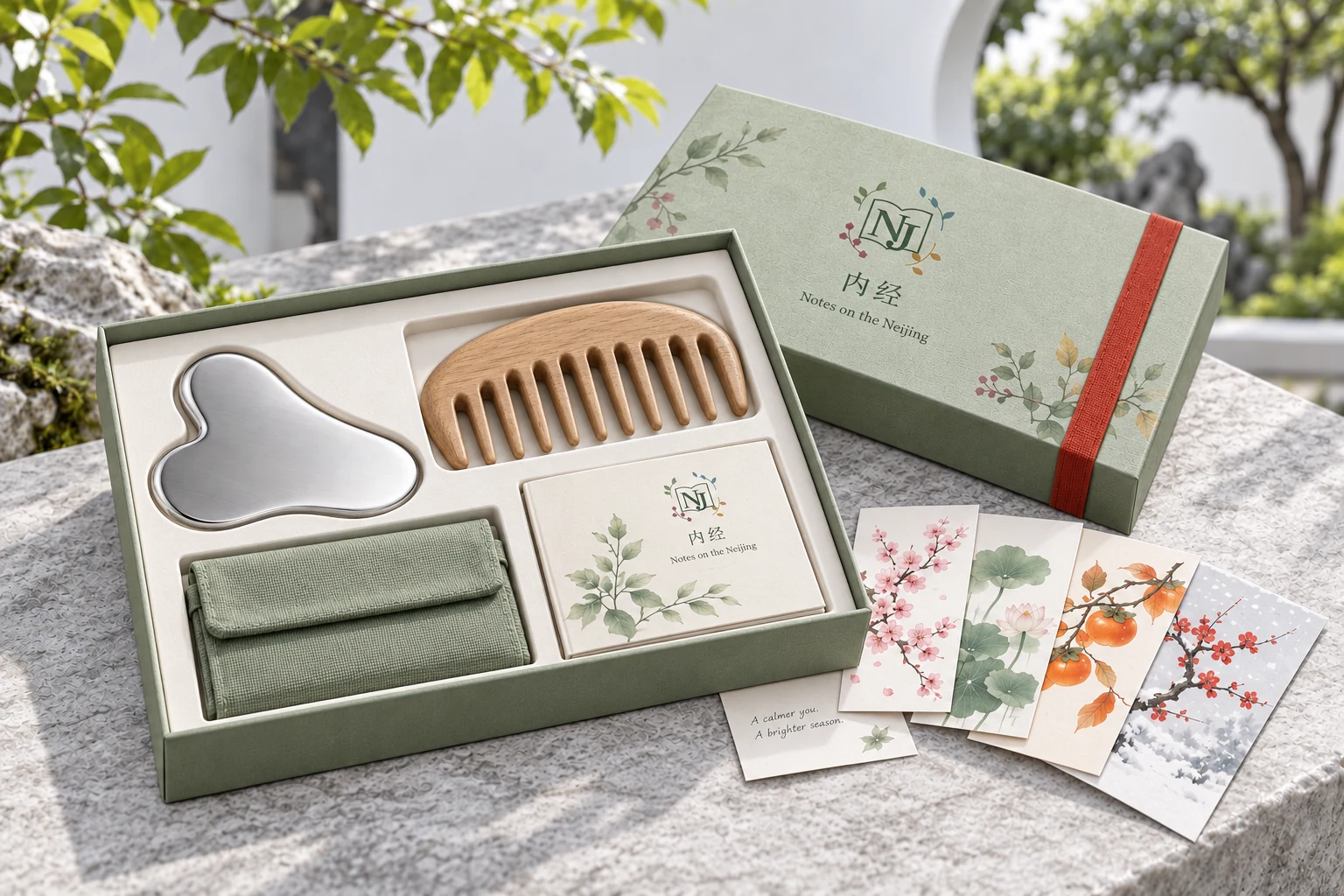
A premium tool begins with a clear specification
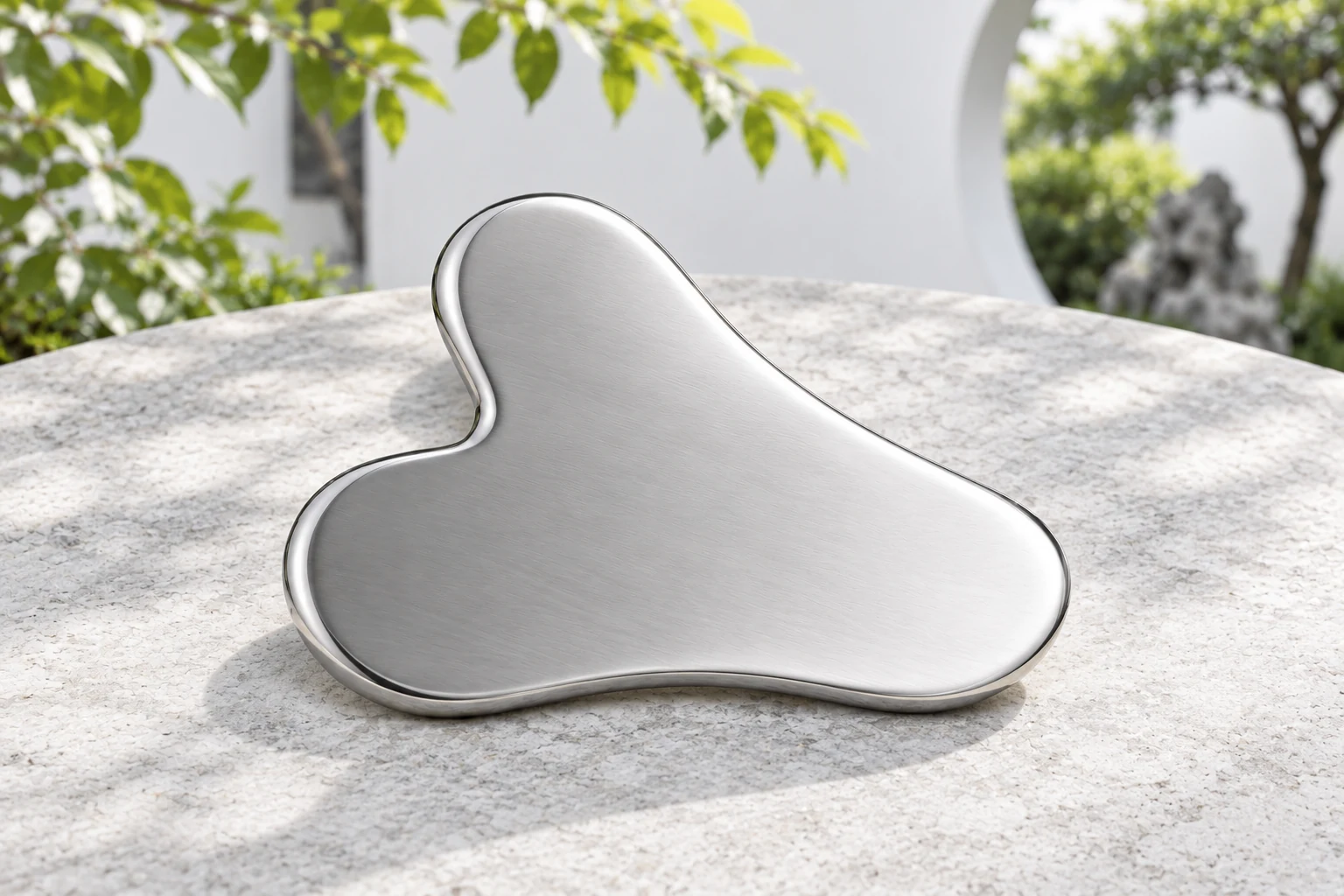
Our preferred sampling direction is solid 316L stainless steel, with a smooth face and carefully rounded, polished contact edges. It is a proposed specification, not a confirmed batch. We will ask suppliers to identify the grade and document the finished surface. The practical aim is a durable, cleanable object with comfortable handling; calling a metal “the best” would tell you less than a specific verified grade and well-made edges.
What 316L means—and what it does not
316-family stainless steels contain molybdenum, which improves resistance to some forms of corrosion compared with 304. The “L” indicates a lower-carbon version. Grade alone does not make a product scratch-proof, sterile or suitable for every skin type. Surface scratches can develop, and a poorly finished edge can irritate skin. We will not promise “cannot scratch” or “cannot hurt skin”. Those are different questions from corrosion resistance.
Edges, surface and use matter together
Inspect the contact edge for roughness, damage or burrs. Keep personal tools clean and dry, stored separately from abrasive objects. Stainless steels such as 316L contain nickel; someone with a metal-contact allergy should check the final material information and seek suitable advice. Any finish, cleaning method and skin-contact suitability will be confirmed for the actual production sample, rather than inferred from a glossy picture.
Light wood can still be thoughtfully made
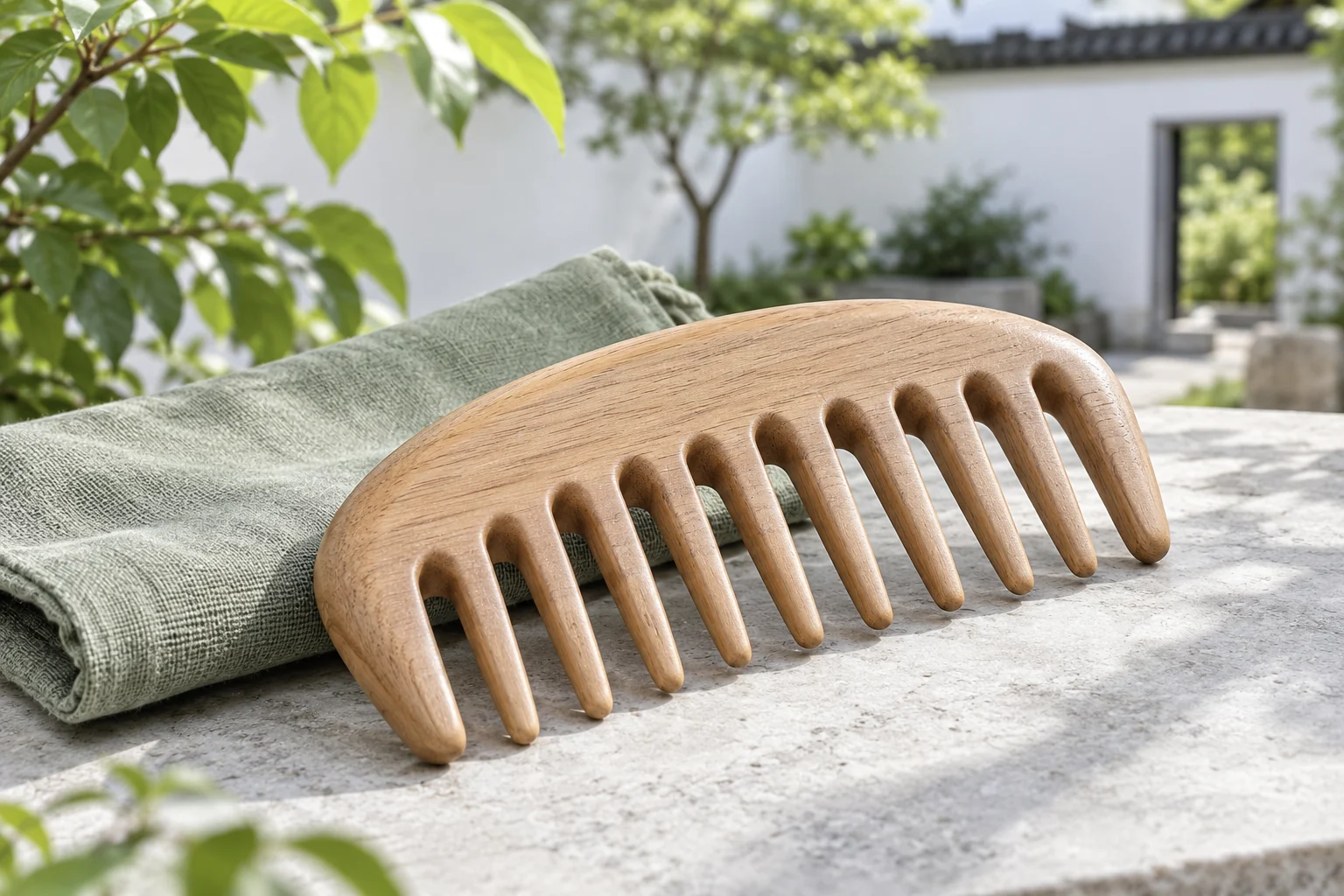
We prefer a pale maple sample to preserve the light, modern look in our pictures. Maple combs already exist in the market; beech and ash also provide useful comparison directions. Natural wood varies: species, sapwood or heartwood selection, processing and the applied finish all affect colour. Beech can develop a warmer pink tone and ash often shows stronger grain, so a named wood alone does not guarantee the pictured look. Ask for actual finished samples. Choose smooth, rounded teeth and a stable body rather than assuming darker or rarer wood means better scalp care.
Look after the finished object
For the proposed wooden comb, avoid prolonged soaking and inspect for splits or rough teeth. Final cleaning and wet-hair suitability depend on the chosen wood and finish; do not assume a wooden object suits every detangling routine. The pouch and fitted gift box protect the objects in storage, while the booklet explains their intended use. Final material, size, care and delivery details will be published before ordering opens.
Three ways to begin.
- Check the named material and whether it is proposed or confirmed.
- Judge the edge or teeth on real workmanship, not only a premium label.
- Read final use and care instructions before buying or trying the object.
Apply the idea
What do you want us to confirm about the material or finish before you decide?
中文要点 · Chinese summary
优先打样方向是316L实心不锈钢刮痧板与浅色枫木梳,榉木可作备选,白蜡木可作为纹理更明显的比较方向。316L的耐腐蚀性不代表防刮花、无菌或绝不伤皮肤;含镍,金属接触过敏者须关注实物说明。木种、边材或心材、干燥与涂层都会影响颜色,要看实物成品色样,不能从AI图认定木种。梳齿顺滑圆润、防勾发和耐用性比“名贵”标签更重要,不宣称木材药用优势。
Follow a related idea.
 Gentle combing: hair care with a lighter touch →
 Gua sha, channels and muscle comfort →
 Choose a tool for a defined use →
A word unfamiliar? Read the short glossary →
Contemporary editorial guidance about objects and gifts. No classical passage is presented as its authority.
Additional context: British Stainless Steel Association, stainless-steel grade and finish guidance.
Additional context: Keller, wooden beech combs in the manufacturer catalogue, page 41 (commercial example).
Additional context: Holz Frank, named maple comb material and finish (commercial example).
Additional context: USDA Forest Service, Wood Handbook: species properties and finishing.
Additional context: Tek Italy Australia, natural ash-wood combs (commercial example).