Traditional care · 刮痧与肌肉
Gua sha, channels and muscle comfort
Read gua sha through its traditional context and the limits of current research, then understand why technique and suitability matter as much as the tool.
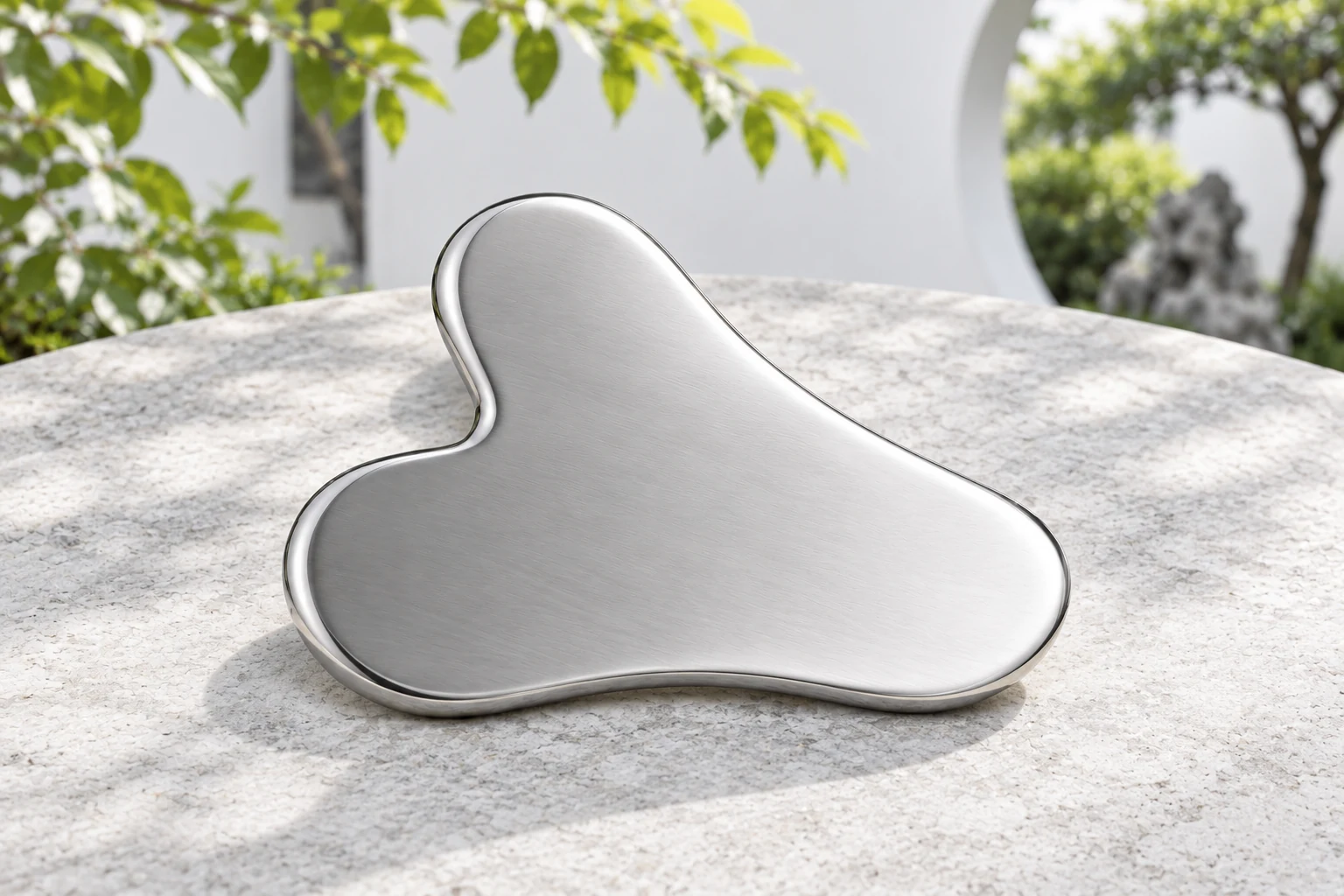
The traditional explanation
Gua sha belongs to the wider history of East Asian care. Its traditional explanation uses qi, blood and jingluo (channels): practitioners describe encouraging movement where a pattern is understood as constrained. Channels are a traditional explanatory framework, not a map of visible muscles or blood vessels. The Neijing helps explain that vocabulary, but an ancient passage is not proof that our proposed tool opens channels or treats disease. See the traditional body guide for context.
What the research can and cannot tell us
A 2007 pilot study measured increased local surface microcirculation after back gua sha in eleven healthy participants. That small, technique-specific finding does not establish whole-body detoxification, hair growth or the effectiveness of this product. Cleveland Clinic describes possible muscle-comfort benefits while noting that stronger evidence is needed. A promising effect is a reason for careful investigation, not a guaranteed outcome for every person or every tool.
Muscle tension needs more than an object
If ordinary work leaves you feeling tense, first consider manageable movement, breaks and recovery. Gua sha may be discussed as an optional hands-on approach with a trained provider, particularly for body work. A rigid tool should not be used to press deeply into an unexplained painful area. Our movement and rest guide helps put a tool within a daily routine rather than making it the whole routine.
Light personal care and body treatment differ
Gentle facial massage and practitioner-led body gua sha use different approaches. Do not transfer a forceful body technique to the face. Technique needs an appropriate glide, pressure and location; exact instructions for our design will follow sample assessment and qualified review. Pain is a reason to stop. Darker marks or more bruising are not goals for this personal-care concept, and a calendar date is not a reason to scrape harder.
Check suitability first
Avoid broken, sunburned or inflamed skin. People who bruise easily, take blood thinners, have relevant skin or circulation conditions, or are uncertain about suitability should seek qualified advice before trying. Do not share personal tools; clean and inspect them according to the final instructions. A stainless-steel tool is not automatically sterile. Persistent, worsening or unexplained pain belongs with an appropriate health professional.
Three ways to begin.
- Start with the purpose and your circumstances, not a promise of detox.
- Seek qualified guidance for body gua sha; distinguish it from light facial massage.
- Check the tool and your skin, and stop if contact hurts or irritates.
Apply the idea
Do you understand the intended use, the limits and the reason to stop before choosing the tool?
中文要点 · Chinese summary
刮痧的传统解释涉及经络、气血与不畅等模式;不能把经络等同肌肉或血管。小样本研究观察到局部微循环变化,不代表全身排毒,也不证明本商品疗效。身体刮痧宜由受训人员指导,轻柔面部护理与身体治疗不能混为一谈。疼痛或刺激应停止,不追求出痧数量和颜色。持续、不明原因的不适应先求助专业人员。
Follow a related idea.
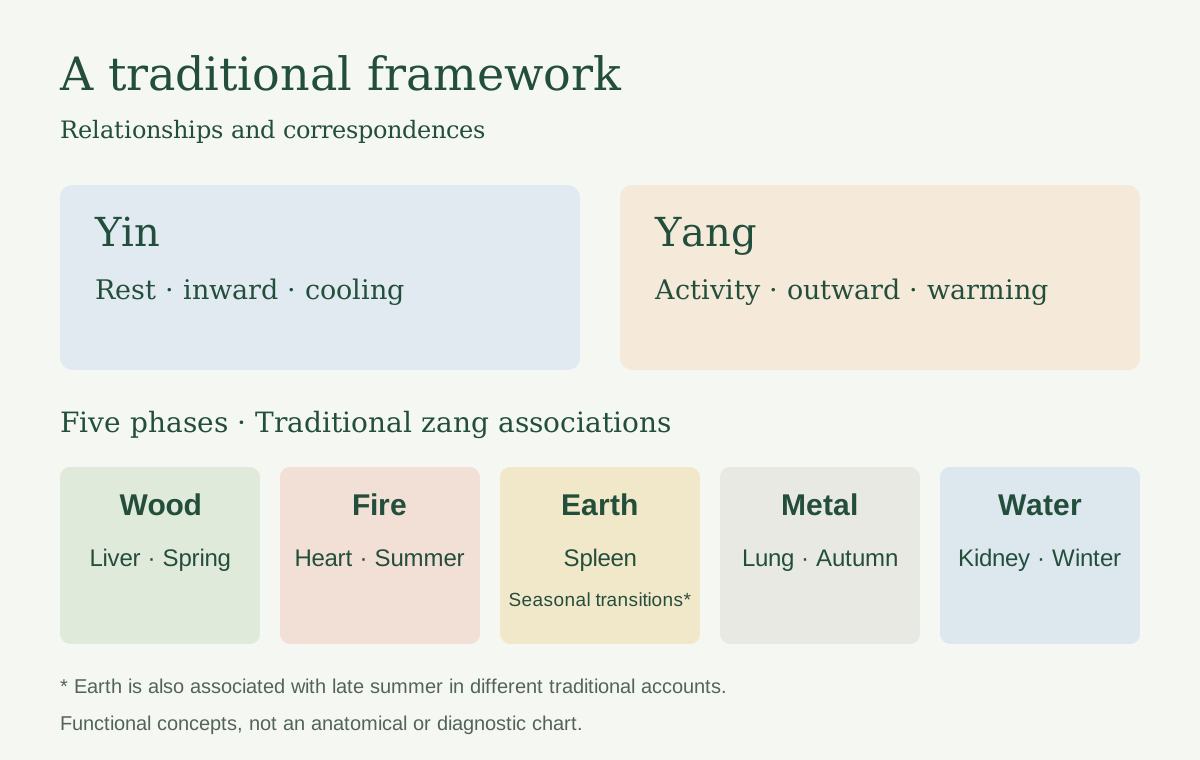 Yin–yang, five phases, and the functional body →
 Choose a tool for a defined use →
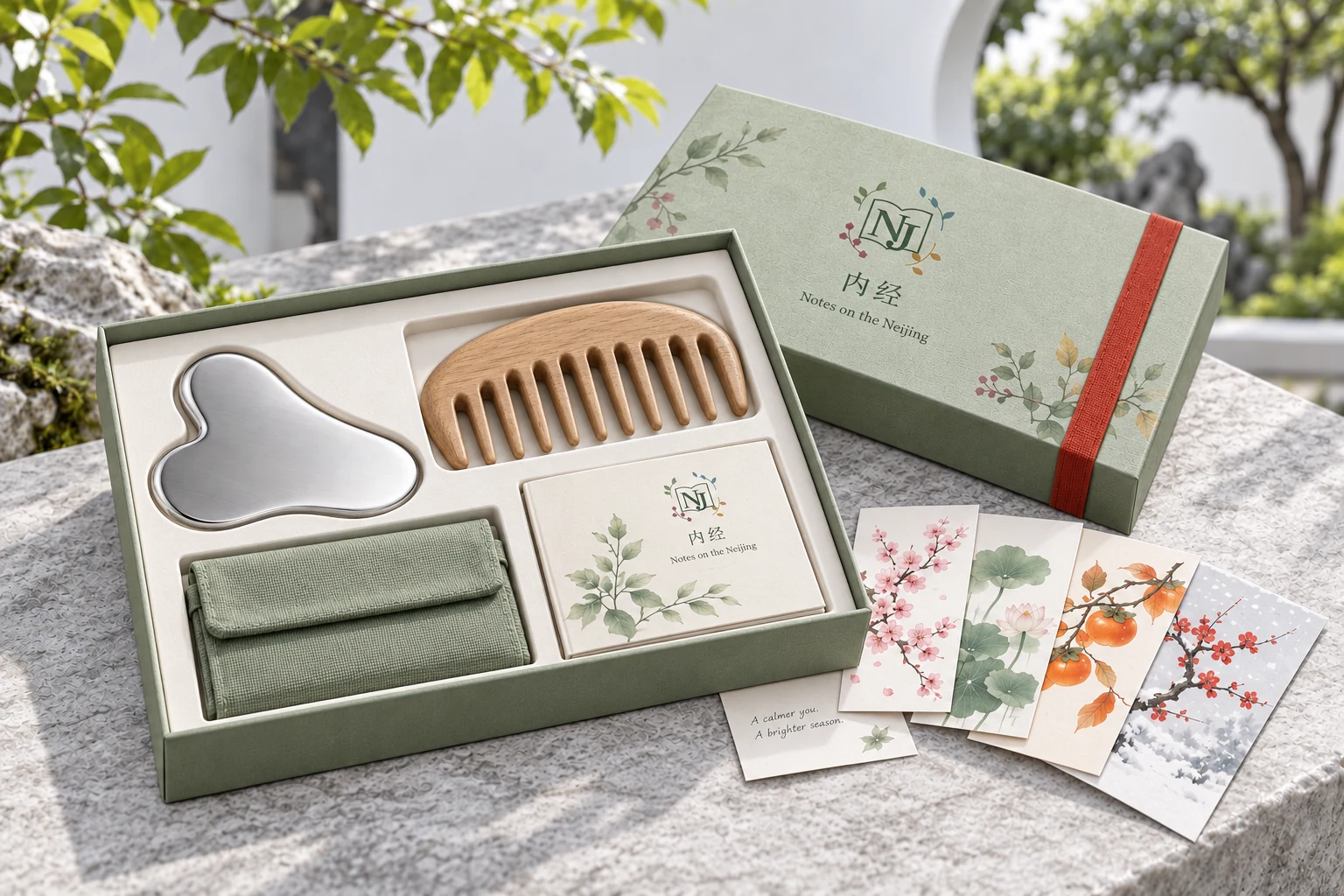 Choosing materials: stainless steel and light woods →
A word unfamiliar? Read the short glossary →
Contemporary editorial guidance about objects and gifts. No classical passage is presented as its authority.
Additional context: Nielsen et al., The effect of Gua Sha treatment on the microcirculation of surface tissue: a pilot study in healthy subjects (2007, n=11).
Additional context: Cleveland Clinic, Gua Sha: What It Is and How To Do It (2025).
Additional context: Nielsen et al., Safety protocols for gua sha and baguan (2012).