Notes on the Neijing · 五劳所伤 · Long looking and sitting
Long Screen Day? The Neijing’s Five Overuses
Tired eyes and a stiff body after hours of emails? Read the Neijing’s traditional warning about prolonged looking and sitting, then try one brief, comfortable break before returning to work.
English narration with English subtitles · 1 min 22 sec.
This video is available as a phone edition. Read this page here, or open it on your phone to watch.
Original AI-illustrated fictional adults, synthetic English narration and English subtitles. Traditional wellness education, not a diagnosis. The traditional theory, classical passages and present-day applications are identified in the lesson.
What can you change before the next email?
Notice the long stretch
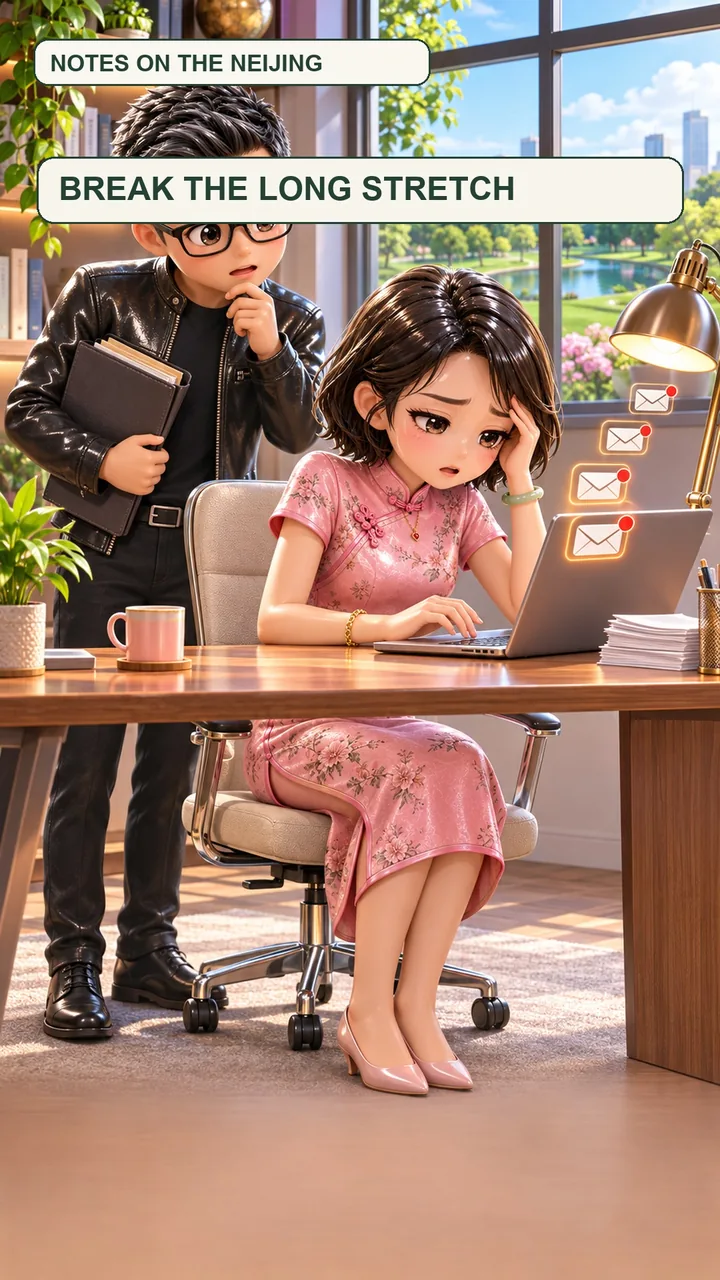
The same screen, chair and growing inbox make the situation visible. The classical line warns against prolonged, repeated use in its own traditional language. Tired eyes alone do not prove a traditional pattern or medical condition.
Take a small break
After one task, look into the distance, blink naturally, then stand and take a brief comfortable walk if you can. Adapt movement to your ability and circumstances. Short breaks may ease discomfort.
Return without a promise
The inbox is still there when the character returns. She feels clearer and replies to the next messages more easily in this illustrated example. Research does not establish a guaranteed productivity increase for everyone.
The Suwen · Xuanming Wuqi passage lists five traditional overuses. The film quotes two. “Blood” and “flesh” retain their traditional context; this does not establish a literal modern mechanism or diagnose an eye or organ condition. The desk, emails and break are editorial illustrations. Modern sources support the limited advice to rest eyes and vary prolonged sitting; evidence for a general work-performance gain is uncertain.
五勞所傷:久視傷血,久臥傷氣,久坐傷肉,久立傷骨,久行傷筋。
Editorial translation: The five overuses include prolonged looking affecting blood and prolonged sitting affecting flesh (editorial translation of traditional terminology).
Read the Chinese source · Suwen · Xuanming Wuqi · 宣明五气篇 →US National Eye Institute · Healthy Vision
CDC/NIOSH · Office environment
PLOS ONE · Micro-breaks meta-analysis
Educational only. Persistent eye pain, significant vision change or ongoing discomfort needs qualified assessment; do not use a short video to diagnose yourself.
Read the full English transcript
Break the long stretch
One email becomes ten. Same screen, same chair, tired eyes. Don't wait for a perfect wellness routine. Break the long stretch.
The classical framework
The Huangdi Neijing, in Suwen's Xuanming Wuqi, says: Overlong looking harms blood; overlong sitting harms flesh. These are two of its Five Overuses. That's traditional language for noticing excess, not a diagnosis from tired eyes.
Modern guidance
Modern eye guidance says long screen focus can tire your eyes, though screens themselves do not damage them. Short work breaks can ease discomfort.
One practical pause
When the next task ends, look into the distance, blink, then step away for a brief, comfortable walk. Let your body and attention reset.
Return to the same desk
Back at the same desk, the inbox is still there. But you feel fresher; one reply comes more easily, then the next. Sometimes that pause helps you handle the next few emails more efficiently than pushing straight through.
Continue reading
Read the original and a practical movement guide at Notes on the Neijing, yineijing dot com. Traditional wellness education, not a diagnosis.
中文要点 · Chinese summary
《素问·宣明五气篇》“五劳所伤”列出久视伤血、久坐伤肉。这里是传统的过用观察框架,不能凭眼疲劳诊断疾病。长期盯屏可能引起眼疲劳;短暂远眺、自然眨眼、离开电脑舒适走几步,有时能让下一段工作更顺畅,但不保证提高每个人的工作表现。