Movement · 动而有节
Move regularly; leave room to recover
Read measured effort as activity supported by recovery, with an ordinary-session example.
食饮有节,起居有常,不妄作劳。素问 · 上古天真论
A present-day application
One step to try today.
- Your situation
- Returning to activity after a less active week
- Try this
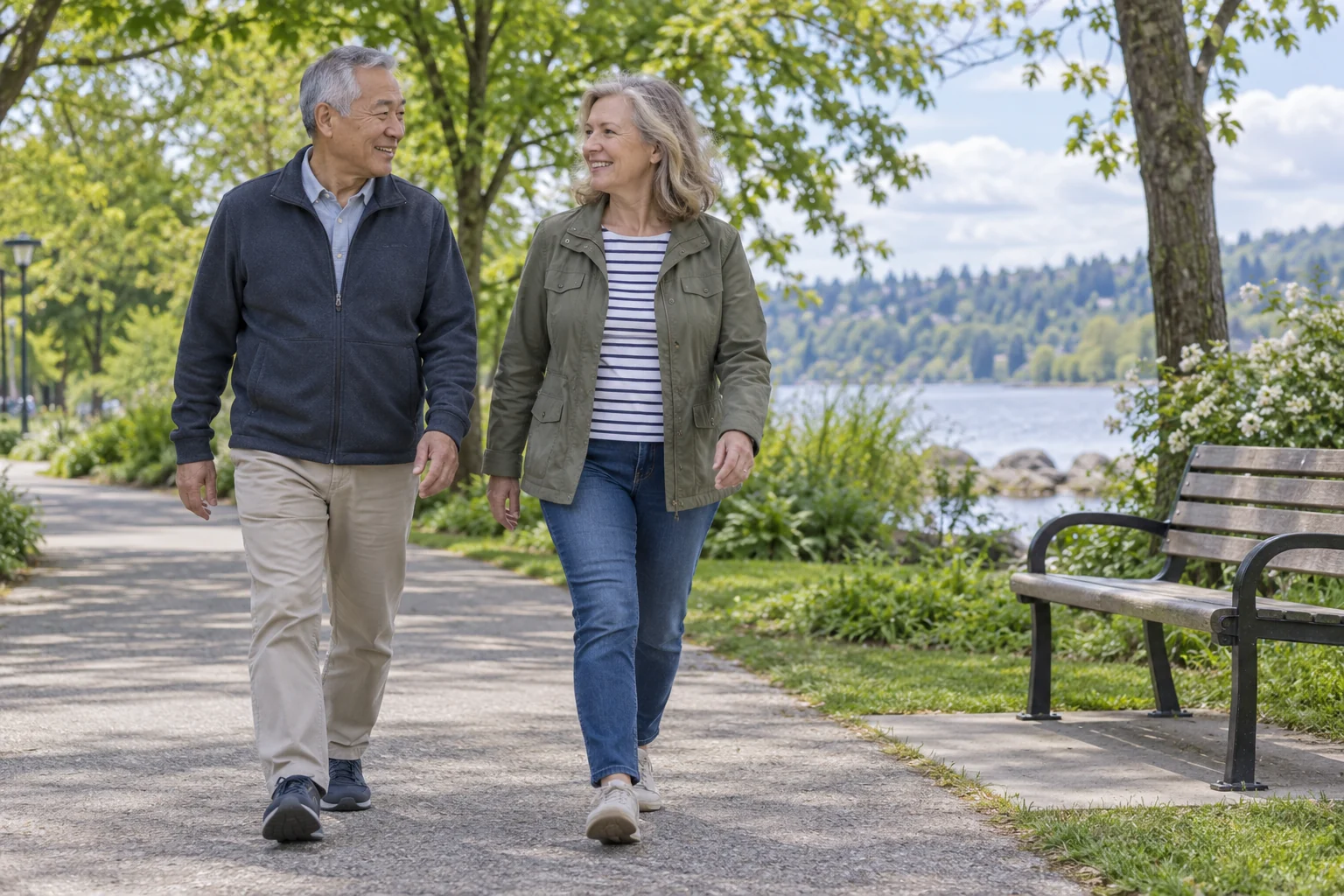
- Choose a familiar, manageable walk or mobility break in a comfortable setting. Leave time to recover, and finish before you feel driven to push through symptoms.
- Review gently
- Check how you feel during and after the activity. Reduce the load if it leaves you unusually exhausted; new or worrying symptoms belong in the help pathway.
An adaptable daily-life example, not an individual treatment plan.
Classical anchor · 素问 · 上古天真论
食饮有节,起居有常,不妄作劳。
Editorial translation
Eat and drink with measure; keep regular daily habits; avoid reckless exertion.
Meaning in context. The three clauses belong together: rhythm is supported by nourishment and a workload that leaves room for recovery. “Regular” need not mean an identical clock time for every person.
Application today. For a busy working day, protect a workable meal, a sleep opportunity, and a familiar activity interval. Adjust one recurring pressure point first.
Reading limit
The line does not set modern portions, sleep hours, or exercise doses.
Classical anchor · 灵枢 · 寿夭刚柔
人之生也,有刚有柔,有弱有强,有短有长,有阴有阳。
Editorial translation
People differ in firmness and softness, weakness and strength, shortness and length, yin and yang.
Meaning in context. The passage introduces differences between people in a clinical discussion. It supports attending to the person rather than assuming one seasonal method fits everyone.
Application today. An experienced exerciser, someone returning after illness, and a person working nights may need different routines. Start with current ability and established care needs.
Reading limit
This passage does not validate an online constitution diagnosis or prediction of lifespan from appearance.
Movement belongs with rest
The Neijing discusses activity, exertion, and regional treatment methods. Our walking example is ordinary modern movement, not a reconstruction of daoyin or proof of opening channels. The useful application is avoiding both prolonged inactivity and repeated overexertion.
Build gradually
Begin with an amount of familiar activity that fits your current ability. Increase gradually rather than trying to recover months of inactivity in one session. Mix movement with recovery; use weather and your condition to choose the setting. WHO guidance is a separate modern evidence framework, not a claim validated by the classical quotation.
One modest session
For someone already comfortable with walking, an ordinary session might begin with an easy pace, continue at a manageable effort, and finish more gently. Use the following day to judge whether the amount fitted your capacity. If it repeatedly leaves normal tasks harder, reduce the demand and consider appropriate guidance. The example illustrates measured effort rather than a prescribed duration.
More effort is not always more benefit
Do not use sweat volume, exhaustion, or soreness as a target for detoxification or yang enhancement. Stop and seek appropriate help for chest pain, faintness, or unusual breathlessness. Existing medical restrictions take priority.
Three ways to begin.
- Begin within your current ability.
- Include a gentle beginning and ending.
- Review recovery before adding more.
Apply the idea
Which one adjustment can you sustain without adding strain?
中文要点 · Chinese summary
运动要有节:从当前能够舒适完成的活动量开始,循序渐进,并留恢复时间。出汗多不等于排毒或扶阳更好;不把散步图说成经络疗法。胸痛、晕厥感或异常气促不能用“坚持一下”带过。
Follow a related idea.
 Summer: Allow activity while protecting rest and fluids →
 Nourishing yang without forcing heat →
A word unfamiliar? Read the short glossary →
素问 · 上古天真论; 灵枢 · 寿夭刚柔. Chinese excerpts: Chinese Text Project. English renderings and present-day examples: our editorial work.
Other classical context in this guide: Suwen · 上古天真论; 四气调神大论.
Additional context: WHO · Guidelines on physical activity and sedentary behaviour.