Measured movement · 八段锦
Baduanjin: a gentle start to the Eight Brocades.
A little space beside a sturdy chair is enough to begin exploring this Chinese movement tradition. Start with comfortable movement and ordinary breathing.
Updated
Recognise an everyday moment
A long stretch of sitting. A chance to move.
Recognise the situation, then choose a manageable change in position or a familiar walk.

After a long time at the desk
One position has filled much of the day. Start by changing the task or position.
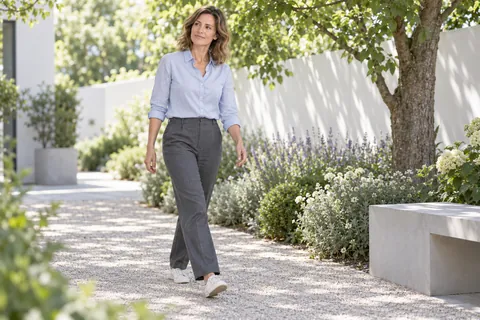
A comfortable movement break
Choose a safe route and a pace that leaves room for the rest of your day.
AI-created scenes illustrating everyday choices.
Eight movements, a small place to begin
Baduanjin, often translated as the Eight Brocades, is a qigong sequence. Its movements combine attention, posture and breathing. NCCIH’s qigong introduction explains the wider practice and its evidence. Here we offer three gentle adaptations: an upward reach, drawing the bow and lifting one hand. Start with one, then use the simple settling finish below. This short selection is not the complete Eight Brocades.
Original AI figures show the continuous route and the key static positions. The movements are simplified and have not been assessed by an instructor. Choose a smaller range than the picture whenever that is more comfortable.
Traditional names mention the Spleen, Kidneys and Heart fire. These belong to the language of Chinese medicine. Read them as the historical meaning carried by the movement, rather than a test of your organs or a promise about a particular illness.
Recognise the eight names
The General Administration of Sport’s illustrated sequence identifies the eight sections. These short English descriptions help you recognise their movement shapes; they are our renderings, not a required memorisation exercise.
- 两手托天理三焦 — Raise both hands; the name refers to the Sanjiao, or three-burner system.
- 左右开弓似射雕 — Open the bow to left and right.
- 调理脾胃须单举 — Lift one hand; the name refers to the Spleen and Stomach.
- 五劳七伤往后瞧 — Look behind; the name refers to weariness and strain.
- 摇头摆尾去心火 — Sway head and tail; the name refers to settling Heart fire.
- 两手攀足固肾腰 — Reach toward the feet; the name refers to the Kidneys and waist.
- 攒拳怒目增气力 — Form the fists and direct the gaze.
- 背后七颠百病消 — Raise and lower the heels. The traditional title’s broad healing language is not an outcome we promise.
Spelling and hand-name variants occur between teaching traditions. Follow one instructor’s sequence rather than combining pieces from unrelated videos.
Prepare before you start
Use a dry, clear floor and comfortable footwear. Keep a stable chair against a wall nearby. Stand at an easy width, knees soft and gaze ahead. The NHS advises nearby support and gradual progression. Breathe normally throughout; leave breath retention, deep horse stances and strong stretching for appropriate instruction.
If you have fallen recently, are recovering from surgery, have an unstable medical condition or feel dizzy when standing, ask about suitable movement before following these standing examples. You can choose to sit and use a small arm movement instead.
Three gentle Baduanjin adaptations, in pictures
Begin with one movement. Watch its silent sequence, check the key positions, then try one or two easy repetitions. You can work through the three in order when comfortable, and finish with the settling movement below.
Original AI illustrations show simplified movement paths. Small hand or face changes can occur between frames. These are selected introductions, not a complete routine or an instructor-assessed demonstration.
01 · Watch the path, then read the positions
Two hands hold up the sky 两手托天
An upward reach adapted from the first Baduanjin section, followed by a clear return.
Silent preview. The video loads only when you press Play.
Keep it easy
Keep heels down and your body upright. Chest height is enough if an overhead reach is uncomfortable.
Watch first. Then try a small, comfortable version at your own pace. The loop shows the route; the numbered pictures explain where to begin, change and finish.
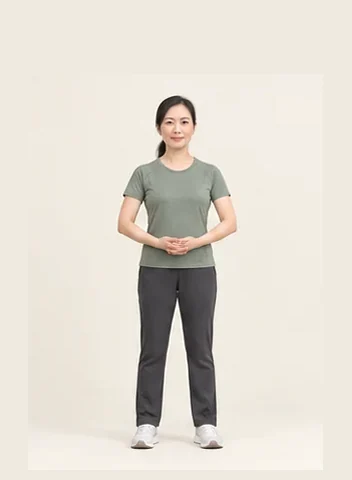
1 Begin Let the hands meet loosely in front of the lower abdomen. Soften your knees and look ahead.
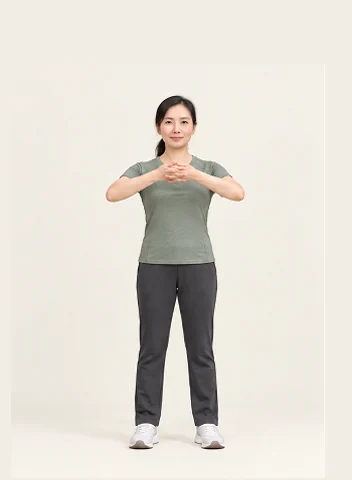
2 Lift through the front Raise the hands to the front of the chest. Keep your shoulders low and neck easy.
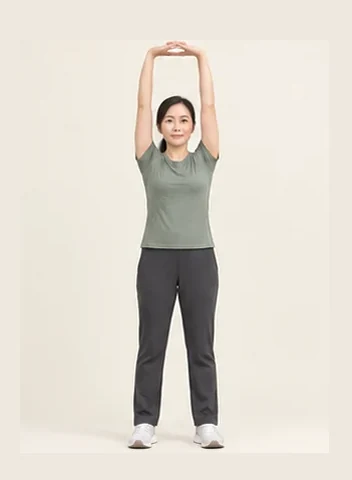
3 Comfortable reach Reach upward only as far as your shoulders allow. Do not lift the chin, lock the elbows or arch the lower back.
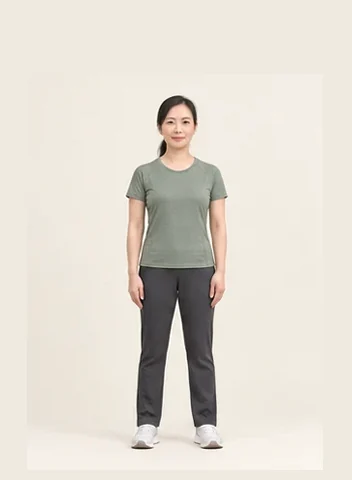
4 Open and lower Let the arms separate and descend by an easy route. Finish with both arms resting beside the body.
02 · Watch the path, then read the positions
Drawing the bow 左右开弓
A small standing version of the second section: open to one side, return, then change sides.
Silent preview. The video loads only when you press Play.
Keep it easy
Keep a shallow, comfortable stance. The hands indicate a bow shape; there is no need to strain or squat deeply.
Watch first. Then try a small, comfortable version at your own pace. The loop shows the route; the numbered pictures explain where to begin, change and finish.
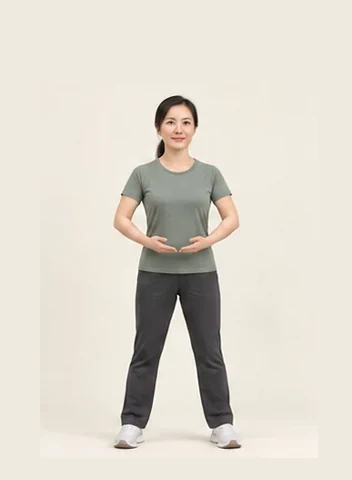
1 Begin in the middle Stand at a comfortable width, knees soft. Hold the hands loosely near the abdomen.
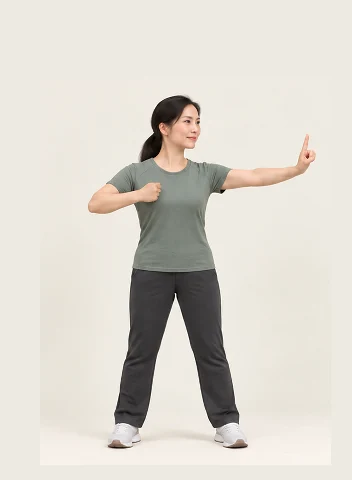
2 Open to one side Let one arm open outward while the other elbow draws back. Keep both shoulders low.
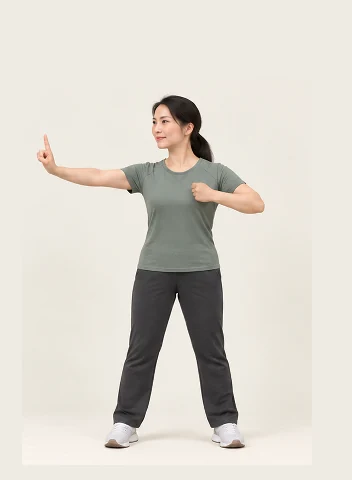
3 Return and change sides Bring the hands back through the middle, then open to the other side. Let your gaze follow the opening hand without forcing the neck.
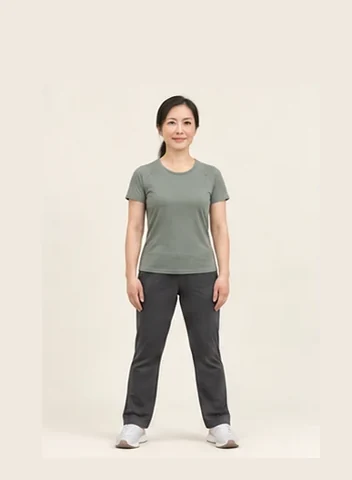
4 Settle Bring the hands back toward the middle, then relax both arms down. Keep your feet steady as you finish.
03 · Watch the path, then read the positions
Lift one hand 单举
Explore two directions at once: one palm rises as the other settles downward.
Silent preview. The video loads only when you press Play.
Keep it easy
This is a gentle adaptation of section three. Keep both shoulders down and shorten the upward reach whenever needed.
Watch first. Then try a small, comfortable version at your own pace. The loop shows the route; the numbered pictures explain where to begin, change and finish.
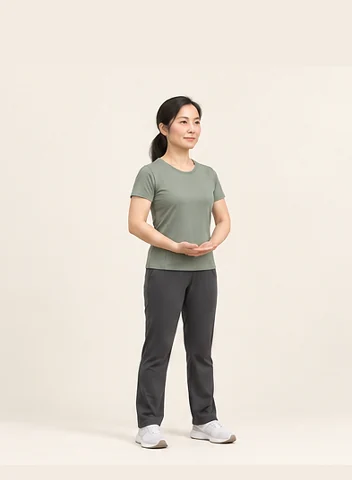
1 Begin Bring both hands loosely in front of the abdomen. Stand evenly and breathe normally.
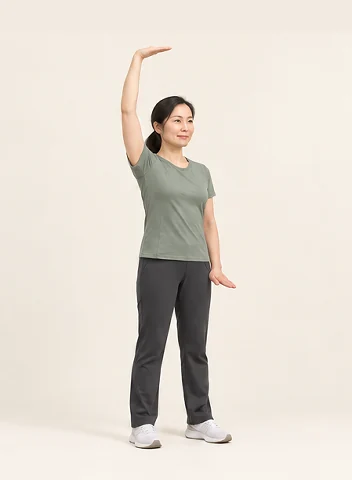
2 Raise one hand Let one palm turn upward and rise to a comfortable height while the other faces down near the hip. Keep the body facing forward.
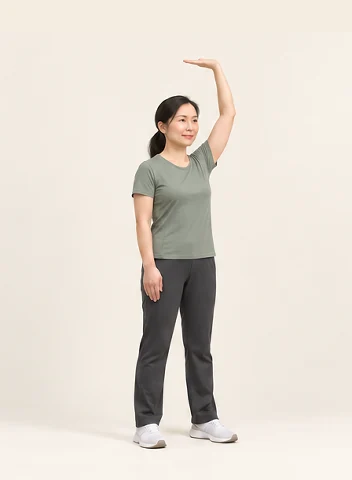
3 Return and change sides Bring both hands back near the abdomen, then change sides. Keep the lifted elbow soft and avoid leaning or stretching the neck.
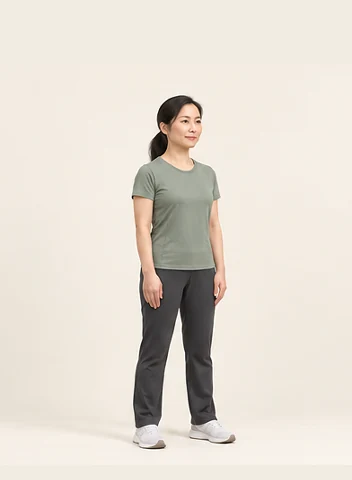
4 Settle Bring the hands back through the middle, then let both arms rest beside you. Pause before another pair.
Bring the practice to a quiet finish
Use this simple settling ending after one movement or after your short selection. It is shared by both of our short practices. You do not need to finish every demonstration before stopping.
A clear ending
Finish and settle 收势
Give the practice an ending. Bring the arms down and return to ordinary standing.
Silent preview. The video loads only when you press Play.
Keep it easy
Keep your feet where they are until you feel settled. Breathe normally; there is no need to hold the breath.
Watch first. Then try a small, comfortable version at your own pace. The finish plays once and rests; follow the three positions below.
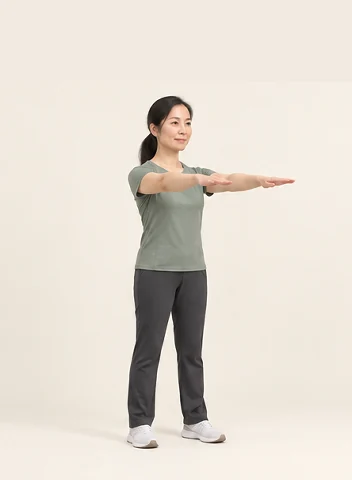
1 Face forward Face forward with the hands in front at a comfortable chest height. Relax the elbows and shoulders.
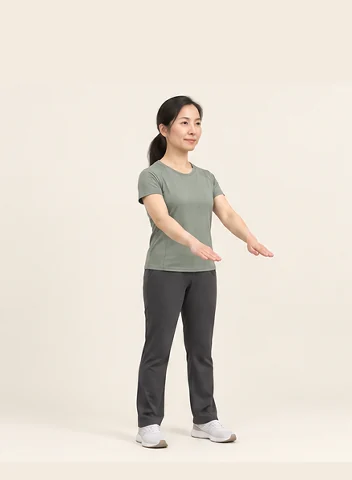
2 Let them lower Lower the hands slowly, releasing any effort through the shoulders and jaw.
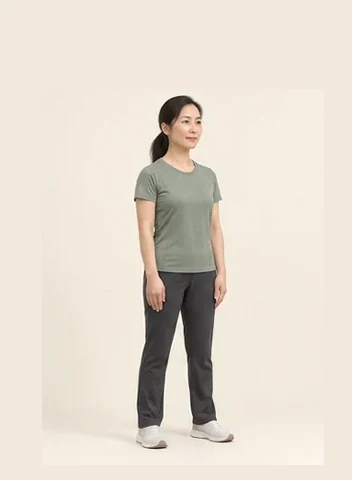
3 Finish Rest the arms beside you. Pause for a few ordinary breaths, then move on when you feel steady.
A chair is a useful option
For the upward reach or single-hand lift, sit on a firm chair without wheels, feet supported and torso upright. Shorten the reach. If standing requires a hand on support, use only the free arm or choose sitting. The pictures show standing examples; skip the bow stance if it is not secure for you. Avoid following a video into heel bouncing, a forward bend or a deep squat just to keep up.
Common mistakes are lifting the chin, shrugging the shoulders, locking the knees and holding the breath. Make the movement smaller before trying harder. Stop if pain increases, you feel dizzy or breathing becomes uncomfortable; urgent chest pain or severe breathlessness needs medical help.
Watch the whole sequence before learning it
China Medical University’s official teaching page presents all eight sections and links its complete instructional video, narrated by Yen Hung-Rong with demonstration by physician Kuo Yu-Hsien. The teaching is in Chinese; the sequence map above helps you follow the names. Watch the demonstration first. For corrections to your stance or individual limitations, learn with an instructor who can see you move.
Sources and teaching context
- General Administration of Sport: The eight illustrated sections
- China Medical University: Eight-section teaching and demonstration link
- NCCIH: Qigong evidence and safety
- NHS: Support and gradual balance practice
Source check: 20 October 2026. English explanations, short practice choices and adaptations are our editorial work. These pages have not received an individual clinical or movement-instructor assessment.