Movement & balance · 太极入门
Tai chi first steps: soften, settle, shift.
You have been sitting for hours. Your shoulders are up, your legs feel stiff and another demanding workout is the last thing you want. Begin with a small, unhurried change of position.
Updated
Recognise an everyday moment
A long stretch of sitting. A chance to move.
Recognise the situation, then choose a manageable change in position or a familiar walk.

After a long time at the desk
One position has filled much of the day. Start by changing the task or position.
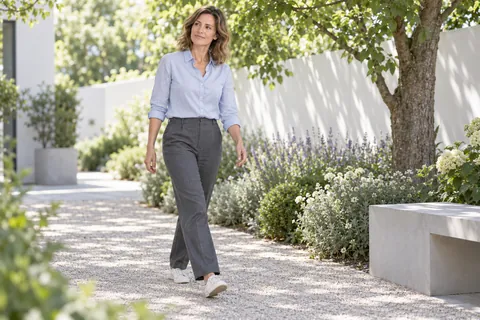
A comfortable movement break
Choose a safe route and a pace that leaves room for the rest of your day.
AI-created scenes illustrating everyday choices.
A useful first encounter
Tai chi combines deliberate movement, posture and attention. In Chinese culture, its changing balance offers a familiar image of yin and yang: one side receives weight as the other becomes lighter. You can explore that relationship without learning a whole sequence on day one.
Our three illustrated choices come from Tai Chi Shibashi Qigong: commencing, opening the chest and cloud hands. This is a gentle qigong introduction, not a complete tai chi boxing form. Torbay and South Devon NHS Trust’s Shibashi teaching page provides the reference context and official demonstrations.
Follow the start, change, comfortable position and return pictures beneath each silent sequence. The figures are original AI illustrations of simplified movements. They have not been assessed by a movement instructor. NCCIH’s tai chi overview describes research involving repeated practice; a short introduction does not reproduce those results.
Make the space ordinary and secure
Clear a dry patch of floor. Wear comfortable clothing and footwear with reliable grip. Put a sturdy chair against a wall, or stand beside a fixed countertop. Keep support close enough to hold without leaning after it. The NHS balance-exercise guide also recommends a wall or stable chair and building up gradually.
If you have fallen recently, are recovering from surgery, have an unstable medical condition or feel dizzy when standing, get advice about suitable movement before trying weight shifts alone. A seated option can still give you a gentle movement break.
Settle before the first movement
Stand with feet comfortably apart and toes pointing forward. Keep both soles down, knees soft and your head above your chest and pelvis. Let the arms rest. Take a few ordinary breaths; you do not need to squat low or follow a breathing count. If you need one hand on a support, move only the free arm or use the seated option below.
Three Shibashi qigong movements, in pictures
Begin with one movement. Watch its silent sequence, check the key positions, then try one or two easy repetitions. You can work through the three in order when comfortable, and finish with the settling movement below.
Original AI illustrations show simplified movement paths. Small hand or face changes can occur between frames. These are selected introductions, not a complete routine or an instructor-assessed demonstration.
01 · Watch the path, then read the positions
Commencing form 起势
A simple beginning: let the hands rise together, then settle them again.
Silent preview. The video loads only when you press Play.
Keep it easy
Keep both feet down, knees soft and shoulders easy. The arms can stop lower than the picture.
Watch first. Then try a small, comfortable version at your own pace. The loop shows the route; the numbered pictures explain where to begin, change and finish.
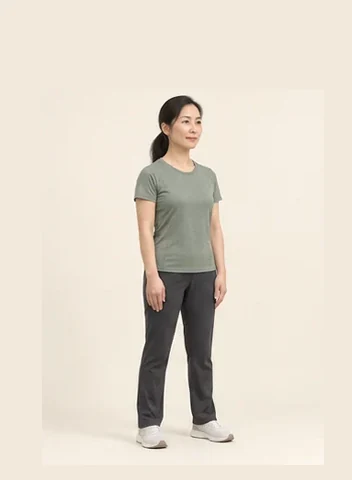
1 Begin Stand comfortably, arms resting beside you. Let your weight settle evenly through both feet.
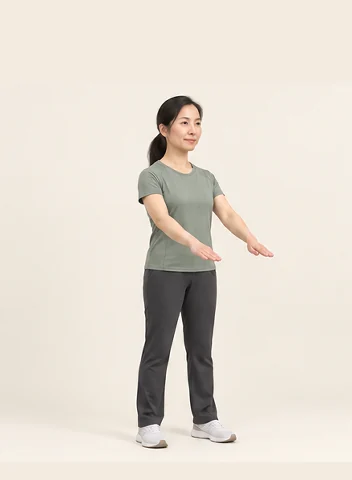
2 Raise Let both hands float forward, with elbows softly bent. Keep your chin level.
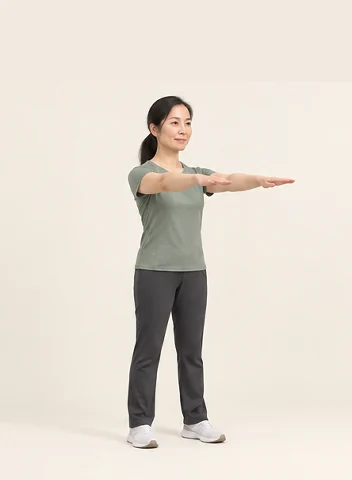
3 Comfortable height Stop below or around shoulder height, without lifting the shoulders or leaning back.
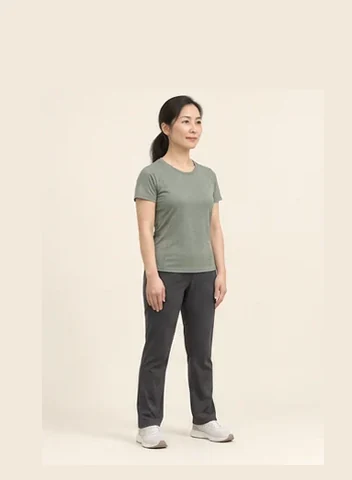
4 Return Lower the hands smoothly. Return to the same quiet standing position before another repetition.
02 · Watch the path, then read the positions
Open the chest 扩胸
After sitting, explore an easy opening and closing of the arms.
Silent preview. The video loads only when you press Play.
Keep it easy
Use a comfortable shoulder range. Do not pull the arms behind you or force a stretch across the chest.
Watch first. Then try a small, comfortable version at your own pace. The loop shows the route; the numbered pictures explain where to begin, change and finish.
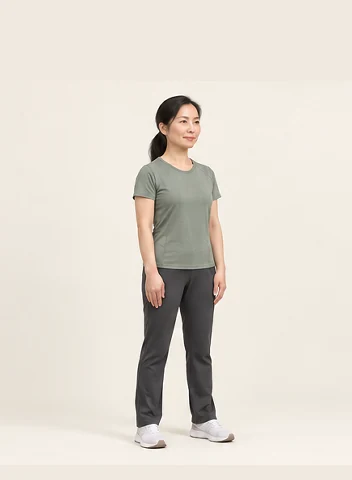
1 Begin Stand evenly with the arms resting beside you. Keep your shoulders relaxed.
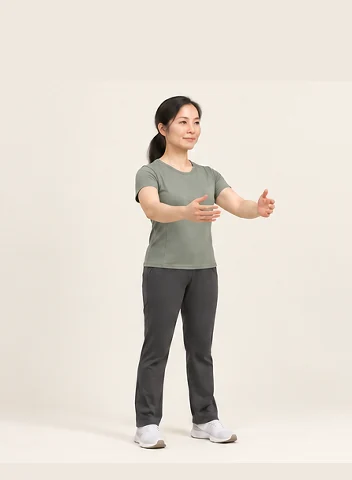
2 Bring the hands forward Raise both hands to a comfortable lower-chest height, palms facing each other and elbows soft.
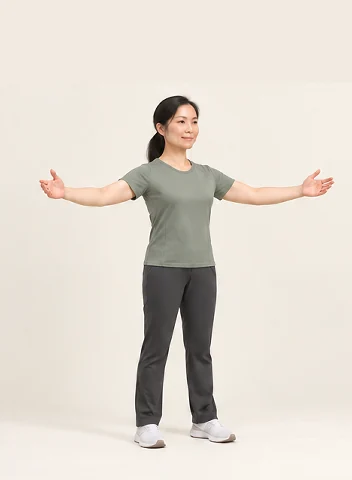
3 Open comfortably Let the hands travel apart in an easy arc. Pause at a comfortable width, without lifting the shoulders.
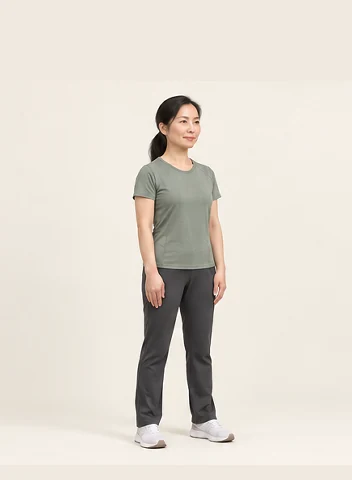
4 Return Bring the hands toward each other in front, then let the arms lower beside you. Begin again only when ready.
03 · Watch the path, then read the positions
Cloud hands 云手
Let one hand rise as the other lowers, then change sides in a small, flowing movement.
Silent preview. The video loads only when you press Play.
Keep it easy
This fixed-foot introduction leaves out stepping. Keep the turn small and avoid twisting hard through the knees.
Watch first. Then try a small, comfortable version at your own pace. The loop shows the route; the numbered pictures explain where to begin, change and finish.
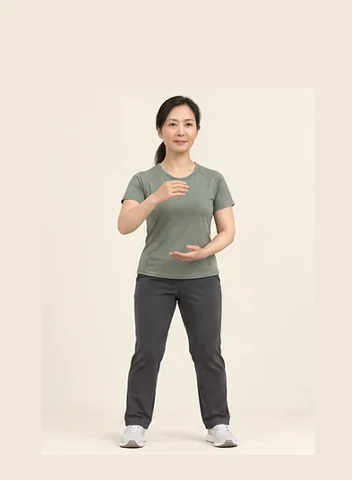
1 Begin in the middle Face forward with both feet planted. Hold the hands loosely in front, one above the other, with elbows relaxed.
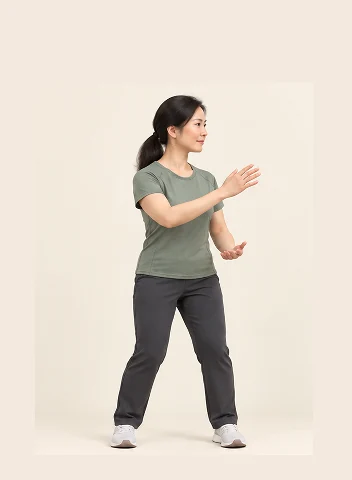
2 Turn to one side Guide the hands to one side with a small upper-body turn. Let one palm rise while the other stays lower.
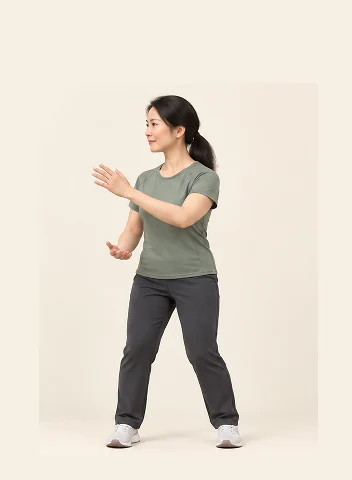
3 Arrive on the other side Let the hands exchange places, with a small turn through the upper body and no forced reach.
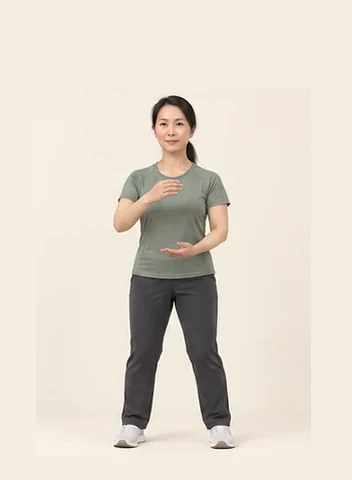
4 Return to the middle Face forward and bring the hands back in front. After your last pair, let the arms settle down.
Bring the practice to a quiet finish
Use this simple settling ending after one movement or after your short selection. It is shared by both of our short practices. You do not need to finish every demonstration before stopping.
A clear ending
Finish and settle 收势
Give the practice an ending. Bring the arms down and return to ordinary standing.
Silent preview. The video loads only when you press Play.
Keep it easy
Keep your feet where they are until you feel settled. Breathe normally; there is no need to hold the breath.
Watch first. Then try a small, comfortable version at your own pace. The finish plays once and rests; follow the three positions below.
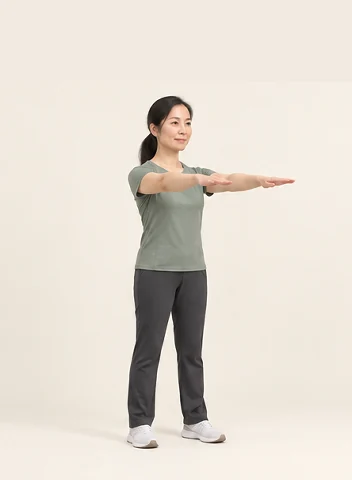
1 Face forward Face forward with the hands in front at a comfortable chest height. Relax the elbows and shoulders.
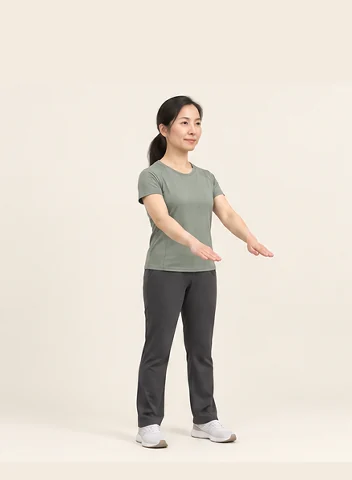
2 Let them lower Lower the hands slowly, releasing any effort through the shoulders and jaw.
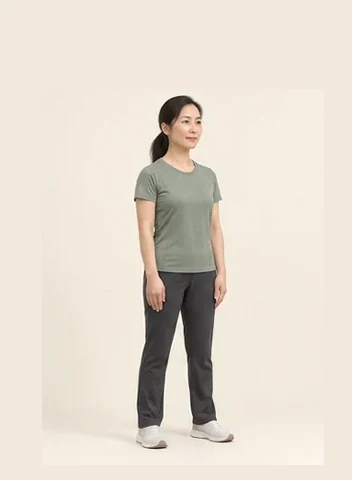
3 Finish Rest the arms beside you. Pause for a few ordinary breaths, then move on when you feel steady.
Make it fit your day
For a seated version, use a firm chair without wheels, feet flat and comfortably apart. Stay upright and explore only the easy arm raise; leave standing weight shifts for a supported lesson. The VA explains seated and standing adaptations. After a long spell at a desk, one gentle practice can be a manageable transition into a short walk.
Finish while you still feel comfortable. Later that day, notice whether you feel pleasantly moved or more sore and tired. Use that information to reduce the range or repetitions next time. Consistency can grow from a modest beginning.
When to stop
Stop for sharp or increasing pain, dizziness, feeling faint or unusual breathlessness. New chest pain, collapse or severe breathing difficulty needs urgent medical help. If an exercise repeatedly causes discomfort, have an instructor or clinician help you adapt it.
See an instructor move
For a next step, open the VA’s “Tai Chi in 10” lesson with Cynthia Frusha. It includes a warm-up and breaks movements down. Watch first, then follow only the parts that fit your ability. An instructor who welcomes beginners and can adapt for chairs, joints or balance is more useful than trying to copy the deepest stance on screen.
Sources and teaching context
- Torbay and South Devon NHS Trust: Tai Chi Shibashi Qigong teaching
- NCCIH: Tai chi, evidence and safety
- NHS: Gentle balance exercises and nearby support
- VA: Seated and standing tai chi and qigong
- VA: Official 10-minute teaching session
Source check: 20 October 2026. English explanations, short practice choices and adaptations are our editorial work. These pages have not received an individual clinical or movement-instructor assessment.