Yang qi · 阳气
Nourishing yang without forcing heat
Read yang within the relationship of yin and yang, with practical examples of clothing, activity, and recovery.
阴平阳秘,精神乃治。素问 · 生气通天论
Classical anchor · 素问 · 生气通天论
阴平阳秘,精神乃治。
Editorial translation
When yin is balanced and yang is securely maintained, essence and spirit are ordered.
Meaning in context. The aim is a coordinated relationship: support and containment belong with activity and warming. Nourishing yang makes sense within this relationship.
Application today. Pair activity with recovery and warmth with comfort. After a tiring day, reducing the next demand can be more appropriate than adding another stimulating practice.
Reading limit
This is a traditional account, not a claim that yin and yang can be measured as equal quantities.
Classical anchor · 素问 · 四气调神大论
春夏养阳,秋冬养阴,以从其根。
Editorial translation
Nourish yang in spring and summer, and yin in autumn and winter, following their root.
Meaning in context. In the chapter’s account, care follows emergence, flourishing, gathering, and storage. Yang is not the only thing to nourish; autumn–winter gives attention to inward settling and conserving. Winter also says not to disturb yang.
Application today. Let periods of activity include recovery. As your routine becomes quieter, preserve rest and nourishment while maintaining suitable movement.
Reading limit
Yangsheng is broader than adding heat or taking tonics. Interpretations vary; these are short editorial readings, not a settled clinical formula.
What yang means here
In traditional Chinese medicine, yang describes warming, activating, and transforming functions in relation to yin. “Nourishing yang” belongs to that theoretical account. It is not a measurable energy score, and more heat is not always better.
A practical foundation
Protect adequate rest, eat regularly, and keep activity manageable. If you are cold, choose ordinary clothing and a comfortable setting. These choices address everyday needs; we do not claim that they correct diagnosed yang deficiency.
An ordinary cold-morning decision
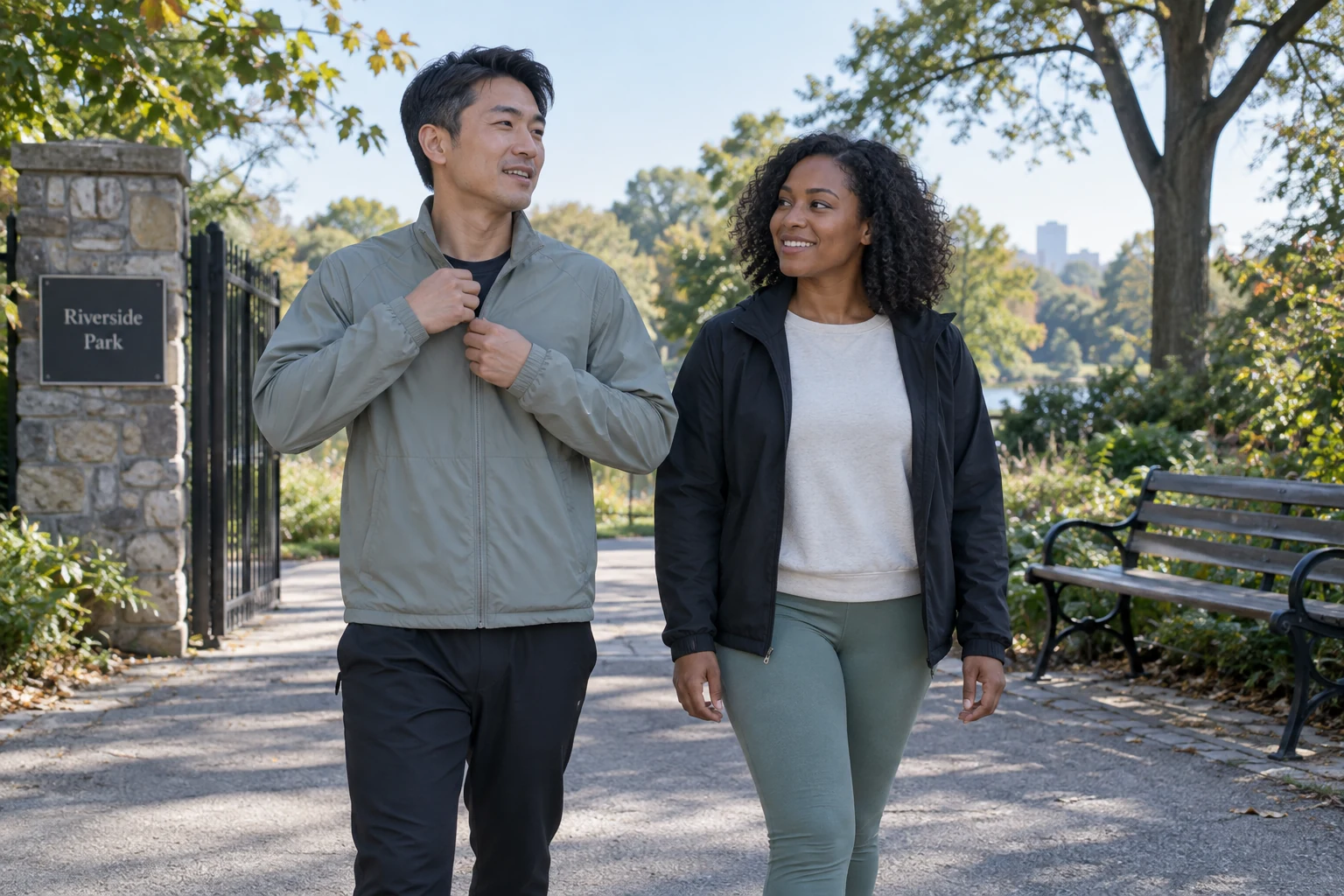
Before a familiar walk, choose clothing suited to the temperature and start gently. If the previous day was unusually demanding, shorten the outing or leave more recovery time. The practical idea is to support an ordinary function without repeatedly exhausting it; the picture illustrates that decision, not visible qi.
What not to infer
Cold hands, tiredness, or low motivation alone cannot establish a traditional pattern and may have other explanations. Repeatedly adding ginger, alcohol, strong herbs, sauna sessions, or burning moxa is not a general plan for everyone.
Before choosing a warming tool
Distinguish comfort from treatment. Heating tools need temperature control, burn precautions, and suitable instructions. Someone with reduced skin sensation needs particular care. We currently sell no warming or moxibustion device; reading-card editions remain prototypes.
Apply the idea
Which one adjustment can you sustain without adding strain?
中文要点 · Chinese summary
阳气在传统体系中指温煦、推动、气化等功能,并非越热越好。日常先顾睡眠、规律饮食与适量活动;怕冷、乏力不能单独判定阳虚。艾灸、强温补与高温产品不能作为全民扶阳方案。
Follow a related idea.
 Winter: Conserve energy while keeping gentle activity →
 Move regularly; leave room to recover →
A word unfamiliar? Read the short glossary →
素问 · 生气通天论; 素问 · 四气调神大论. Chinese excerpts: Chinese Text Project. English renderings and present-day examples: our editorial work.
Other classical context in this guide: Suwen · 生气通天论; 四气调神大论.