Mind & emotions · 调神
Regulate the spirit through a manageable day
Connect keeping the spirit settled with quieter transitions, manageable demands, and supportive company.
恬惔虚无,真气从之,精神内守。素问 · 上古天真论
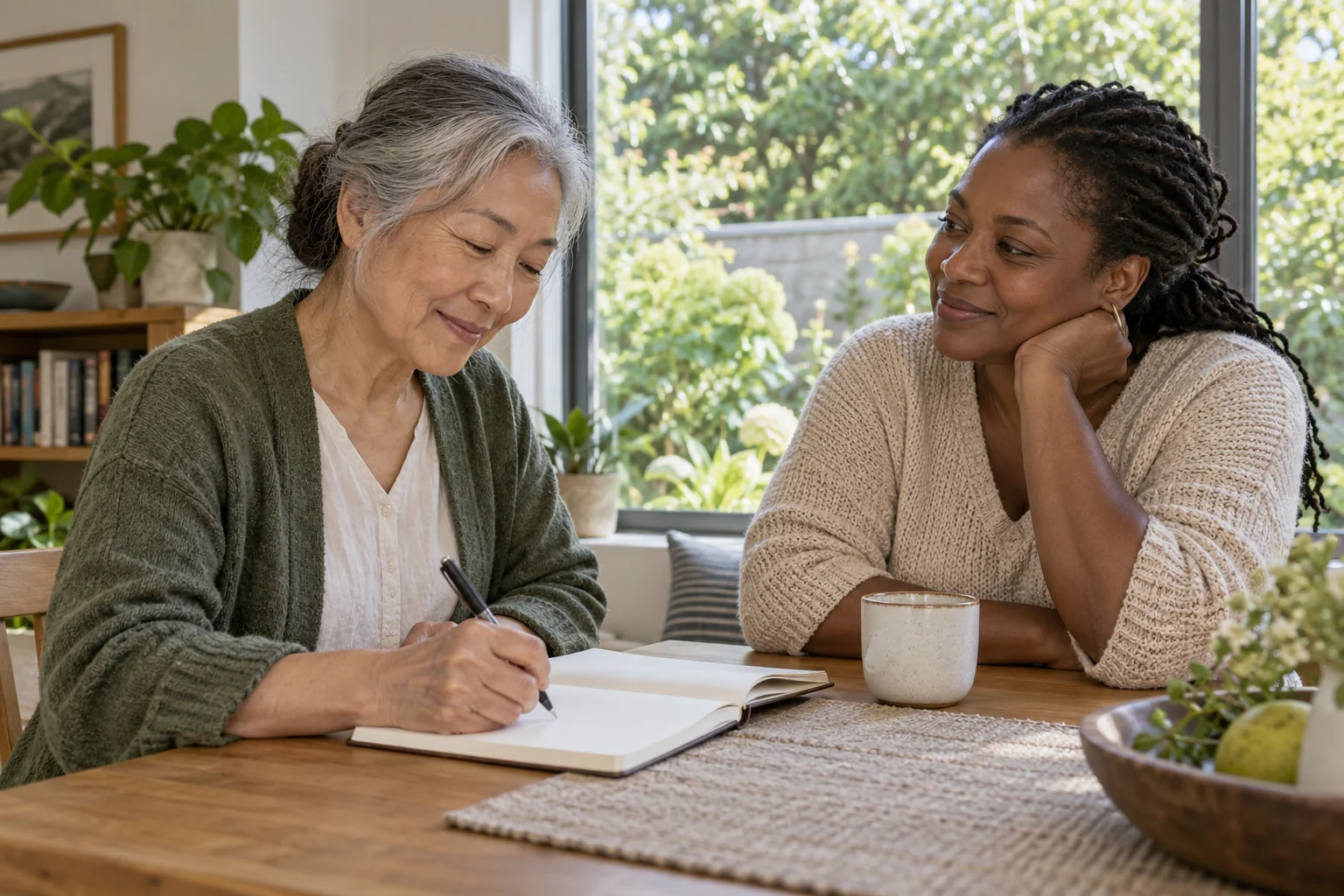
A present-day application
One step to try today.
- Your situation
- A rushed transition between work and rest
- Try this
- Make a brief pause with fewer competing tasks, or contact someone supportive. Choose a comfortable outdoor place if useful and accessible; an indoor pause is equally valid.
- Review gently
- Ask whether you have a little more room to respond. Persistent distress deserves support; a difficult day is not a failure to regulate your spirit.
An adaptable daily-life example, not an individual treatment plan.
Classical anchor · 素问 · 上古天真论
恬惔虚无,真气从之,精神内守。
Editorial translation
With calm and freedom from excessive striving, true qi follows; essence and spirit are kept within.
Meaning in context. The passage values composure and freedom from excessive demands. Jing and shen have traditional meanings that cannot be reduced to a modern mood score.
Application today. Give one part of the day fewer competing demands: finish a meal without work, make a quiet transition after work, or talk with someone supportive.
Reading limit
Calm is not compulsory cheerfulness, emotional suppression, or a reason to blame someone for illness.
Emotion belongs in the whole account
The Neijing links spirit, emotions, and bodily life within its traditional framework. Five-phase emotion correspondences are a way of organising that account, not proof that anger damages a measurable organ every time it occurs.
Make conserving attention concrete
Choose one transition you repeatedly rush: finishing work, beginning a meal, or going to bed. Allow a quiet interval or a supportive conversation there. “Keeping the spirit within” is used here to explain reducing needless dispersal, not withdrawing from relationships or suppressing difficult feelings.
A practical daily application
Reduce one avoidable demand, keep a regular meal or rest interval, and make space for a supportive conversation. Spring’s openness, autumn’s gathering, and winter’s conserving can guide priorities without prescribing how you must feel.
Know when everyday adjustment is insufficient
Do not blame yourself for an emotion or buy a tool to cure it. Distress that persists, affects functioning, or feels unsafe needs appropriate professional support. Cards can hold a reflection prompt; they are not anxiety treatment.
Three ways to begin.
- Name one avoidable demand.
- Make a quieter transition or ask for supportive company.
- Use additional support when everyday changes are insufficient.
Apply the idea
Which one adjustment can you sustain without adding strain?
中文要点 · Chinese summary
调神不是压抑情绪,而是把生活负担、休息、饮食与人际支持安排得更可持续。五志对应属于传统解释,不把一次生气说成某脏器损伤。持续影响生活的困扰需要适当支持,纸品不能承担治疗。
Follow a related idea.
 Autumn: Gather a sustainable rhythm rather than withdraw completely →
 Winter: Conserve energy while keeping gentle activity →
A word unfamiliar? Read the short glossary →
素问 · 上古天真论. Chinese excerpts: Chinese Text Project. English renderings and present-day examples: our editorial work.
Other classical context in this guide: Lingshu · 本神; Suwen · 四气调神大论.