Practical reference · 从体感找调养方向
Everyday symptoms: traditional directions for care
Sleep, cold sensitivity, digestive heaviness, dryness, tension and stiffness: understand the traditional care direction and choose a realistic action.
法于阴阳,和于术数……故能形与神俱。素问 · 上古天真论
Choose a concern · 找到调养方向
From a familiar concern to a useful next step.
睡眠不安 · 养阴、调神、和胃
Restless nights
Consider together. Consider what accompanies the poor sleep: dryness and warmth at night; tension after stress; or fullness after a late meal.
Traditional direction. Dryness with nighttime warmth points toward yin nourishment in traditional reasoning. Stress with tension brings qi regulation and care of shen into view. Late-meal fullness directs attention toward the stomach and meal rhythm.
Begin in daily life. Protect your main sleep opportunity, move a heavy evening meal earlier, and create a quieter transition before bed. Choose the change that matches your recurring situation.
Build a sleep rhythm →乏力怕冷 · 益气、护阳
Low energy & feeling cold
Consider together. Look at stamina, warmth preference, recovery, voice and sweating together. Cold sensitivity adds a different direction to tiredness than nighttime warmth and dryness do.
Traditional direction. Low stamina is commonly discussed through qi; a recurring cold-sensitive combination brings yang into focus. The daily emphasis is nourishment, warmth and a measured workload.
Begin in daily life. Keep a reliable meal interval, dress comfortably for the setting, and shorten an activity that repeatedly leaves the next day harder. Persistent unexplained fatigue deserves assessment.
Understand nourishing yang →腹胀困重 · 健脾、理气、化湿
Fullness & a heavy feeling
Consider together. Review appetite, meal size, stools, heaviness and the timing of discomfort. Fullness after hurried meals is a useful starting point for changing the routine.
Traditional direction. Traditional Spleen-and-Stomach reasoning connects nourishment, transformation and fluid distribution. Fullness with heaviness invites the dampness discussion; fullness that tracks stress also brings qi movement into view.
Begin in daily life. Try a regular meal time and a smaller comfortable portion, eat without rushing, and take an easy walk afterward if it suits you. Keep enough food and ordinary fluids.
Read digestion & dampness →干燥不润 · 养阴、生津、养血
Dry skin, mouth or eyes
Consider together. Consider dry air, screen use, fluid habits and sleep alongside the duration and other symptoms.
Traditional direction. Dryness leads toward moistening and fluids; dryness accompanied by nighttime heat adds a yin-nourishment direction. Traditional accounts also discuss Blood’s nourishing role for eyes and skin.
Begin in daily life. Use screen breaks and suitable eye or skin care, keep drinking and meals regular, and protect sleep. Persistent eye pain, visual changes or marked thirst need clinical attention.
Read care for dryness →情志不舒 · 疏理气机、调神
Tension, sighing & emotional strain
Consider together. Notice whether tension, fullness, sleep disruption and a pressured day tend to occur together.
Traditional direction. The traditional Liver’s free-flowing function and the care of shen offer a way to discuss this combination. Regulation means helping daily life feel less constrained and allowing recovery.
Begin in daily life. Make time for a comfortable walk, lighten one avoidable demand, and talk with someone supportive. Keep meals and sleep steady through a stressful week.
Make emotional care practical →肌肉拘紧 · 舒筋、活动、温养
Everyday muscle stiffness
Consider together. Consider long sitting, a new workload, exercise recovery, cold exposure and whether discomfort changes with movement.
Traditional direction. Traditional channel and qi–blood vocabulary describes comfortable movement and nourishment of tissues. For ordinary stiffness, a practical starting direction is gentle mobility with enough recovery.
Begin in daily life. Change position regularly, start movement easily, and reduce a workload that aggravates discomfort. A care tool is optional and needs the technique and suitability explained in its own guide.
Pair movement with recovery →发、记忆与耗损 · 气血精的濡养
Hair, memory & recurring depletion
Consider together. Look at changes over time alongside sleep, nourishment, workload and medicines. Rapid hair shedding or a marked change in memory is a reason for assessment.
Traditional direction. Traditional medicine discusses hair through Blood and Kidney essence, and mental presence through shen. These are connected nourishment themes: a useful direction is to restore a sustainable rhythm and varied food.
Begin in daily life. Protect regular meals and sleep, reduce repeated overwork, and use gentle grooming. Bring ongoing hair or memory changes to a clinician rather than selecting a tonic by a rhyme.
Start with everyday nourishment →Classical anchor · 素问 · 上古天真论
法于阴阳,和于术数……故能形与神俱。
Editorial translation
Take yin and yang as a guide and harmonise with methods of cultivation … so that bodily form and spirit remain together.
Meaning in context. The opening chapter places patterns of living, food, exertion, and form-and-spirit together. It supplies a whole-person framework rather than a single supplement target.
Application today. Review a demanding day as a whole: did work crowd out food, movement, rest, or supportive contact? Choose the part that is least sustainable.
More about the reading context
Shushu here is not simply fortune-telling or a modern body score. The chapter’s idealised longevity account is not a guaranteed outcome.
Classical anchor · 素问 · 上古天真论
食饮有节,起居有常,不妄作劳。
Editorial translation
Eat and drink with measure; keep regular daily habits; avoid reckless exertion.
Meaning in context. The three clauses belong together: rhythm is supported by nourishment and a workload that leaves room for recovery. “Regular” need not mean an identical clock time for every person.
Application today. For a busy working day, protect a workable meal, a sleep opportunity, and a familiar activity interval. Adjust one recurring pressure point first.
More about the reading context
The line does not set modern portions, sleep hours, or exercise doses.
Begin with the combination that recurs
Use the care reference to connect an everyday concern with traditional reasoning and a practical next step. Ask what comes with it, when it occurs, and which daily habit makes a difference. This gives more useful direction than matching one symptom to one label.
Give a direction a concrete meaning
养阳 means supporting warming and activating functions while conserving recovery; 养阴 gives attention to rest and moistening; 健脾 addresses the traditional processing of food and fluids; 理气 and 调神 address ease of movement, emotional life and daily demands. For home use, begin with ordinary habits suited to the combination.
Use familiar rhymes as memory aids
“Tired—qi; cold—yang; dry—yin; heavy—damp” can help organise reading. The fuller picture matters: unsettled sleep can accompany dryness, stress or digestive fullness, each leading to a different care priority. Traditional Liver, Heart, Lung, Spleen and Kidney names describe functional relationships across the whole account.
Questions worth bringing to a consultation
Record when the problem started, accompanying changes, what eases or aggravates it, and your medicines or supplements. A traditional practitioner can add examination and pattern assessment; a primary-care clinician can investigate persistent symptoms. Palpitations, recurrent infections, unexplained pain or major changes in memory merit that wider conversation.
Apply the idea
Which recurring situation fits your day, and which small adjustment is practical?
中文要点 · Chinese summary
从反复出现的一组体感找到调养方向:睡眠结合夜间干热、情绪或晚餐;乏力结合怕冷、恢复与出汗;腹胀困重结合饮食和排便;干燥结合津液与休息;拘紧结合活动与恢复。将养阳、养阴、健脾化湿、理气调神落到起居饮食运动上。口诀用于记忆,完整思路按组合展开;持续或明显变化则带着记录就诊。
Follow a related idea.
 Constitution & patterns: find a useful direction →
 Six qi: climate, comfort and daily care →
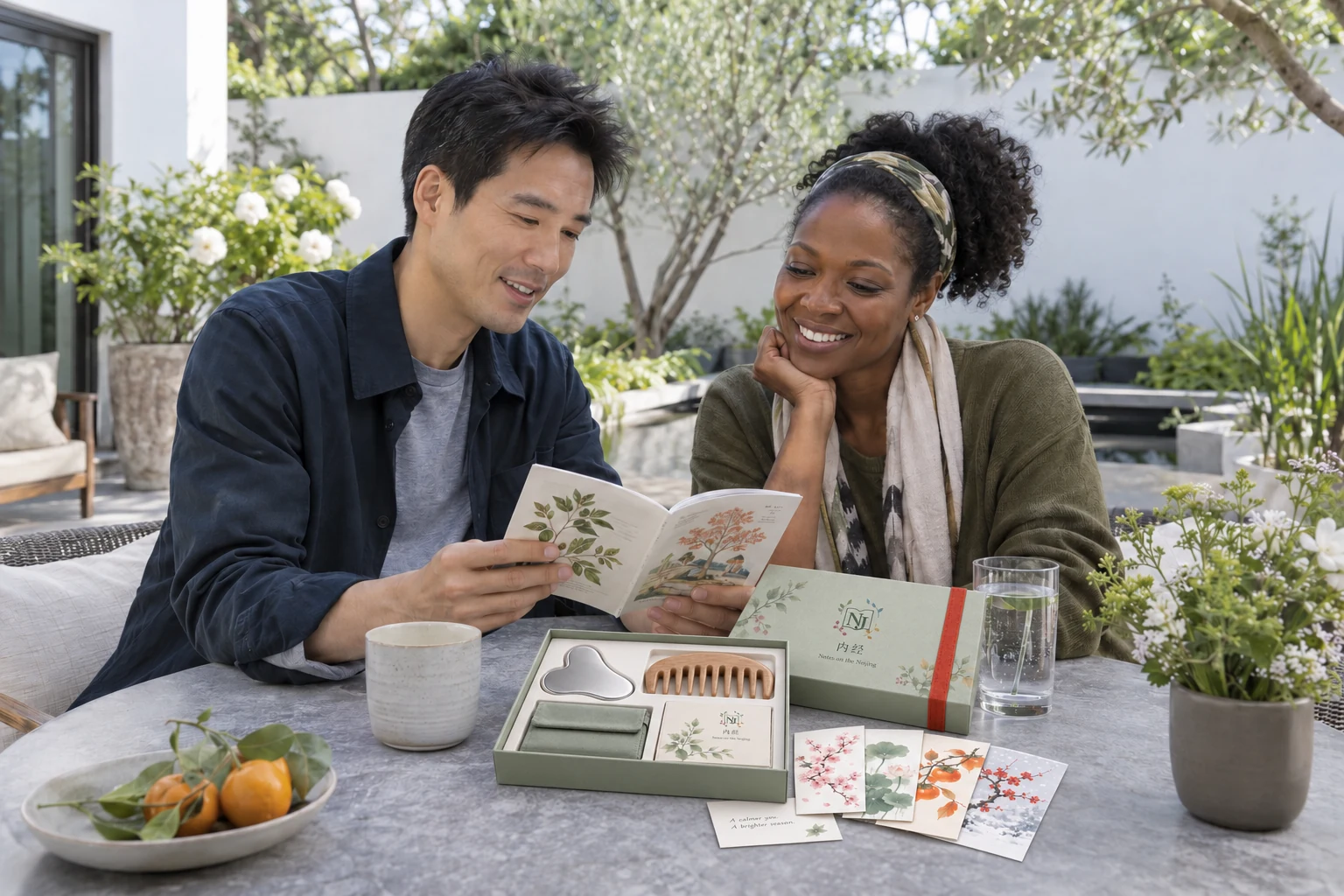 Choose a tool for a defined daily use →
A word unfamiliar? Read the short glossary →
素问 · 上古天真论. Chinese excerpts: Chinese Text Project. English renderings and present-day examples: our editorial work.
Additional context: Beijing Chuiyangliu Hospital · 中医视角下,你是哪种“睡不着”? · 29 May 2026.
Additional context: NHLBI · Healthy sleep habits.
Additional context: NHS · Tiredness and fatigue; Insomnia.