Spring · Chinese solar term
Grain Rain
谷雨
Grain Rain (谷雨) is one of the six spring terms in the traditional Chinese solar calendar. Carry a workable meal routine into the next season
Find this term’s date in the Chinese lunar calendar
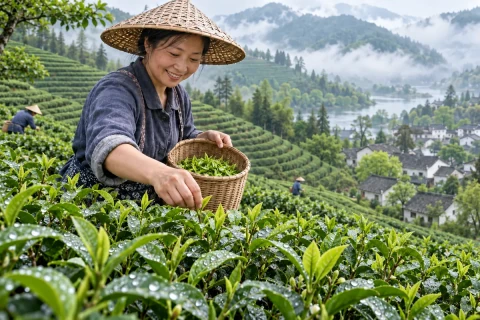
Illustration & cultural context · 图画说明
The story inside the image
Spring tea culture in tea-growing regions
Tender leaves and a tea picker bring late spring into focus. Spring moisture supports growth, and tea picking is a seasonal practice in some tea-growing regions. Timing varies with location, cultivar, and weather; tea is not all picked on Grain Rain itself.
中文 · 为什么这样画
谷雨,雨润新芽与春茶
雨后茶园里的采茶动作和嫩叶,让“谷雨”不只是一片绿色风景。水分与春季生长是主题,采春茶是部分产茶地区的时令文化。茶叶萌发与采摘时间会随地区、品种和天气变化,不能说所有茶都只在谷雨当天采。
An editorial interpretation of regional farming, traditional phenology, or local custom. This is a generated illustration, not a documentary photograph or a forecast for every place.
Educational guidance for adults, not a diagnosis or a substitute for clinical assessment.
Bring the idea into your day
Carry a workable meal routine into the next season
Look at a day when meals became difficult. A few available ingredients and a realistic place to eat can make the next busy day simpler.
- Find the difficult interval. Name the meal most often displaced by work or travel and decide where it could fit.
- Choose one ordinary combination. Use a familiar staple, vegetables and suitable protein; fresh, frozen and cupboard foods can all help.
- Keep what worked. Note one meal and one activity or rest cue worth repeating as your local conditions change.
How this term differs, review & sources
This point in the season. Clear and Bright prepared an outdoor visit. Grain Rain makes food and a few useful habits easier to sustain; Beginning of Summer next prepares a room or journey for the local weather ahead.
Review after a week. Which meal was easiest to make dependable? What one routine is worth carrying into the next part of the year? A week is a convenient time to review what fits your life.
Traditional reading · Suwen · Chapter 2 · 四气调神大论篇第二
春三月,此谓发陈。……夜卧早起,广步于庭,被发缓形,以使志生。
Editorial translation. The three months of spring are called bringing forth the old. … Retire later and rise early; walk at ease in the courtyard, loosen the hair and relax the body, allowing intention to arise.
The passage joins seasonal emergence with unhurried movement and room for intention. Its historical sleep pattern belongs to that setting; using it today means protecting sufficient sleep when routines change. The spring names follow the traditional Chinese calendar, while local seasons and weather differ.
Application today. These practical suggestions turn that broad framework into present-day choices about starting, adapting and sustaining a routine. They are editorial applications, not prescriptions from the chapter. Use the linked guides for ability adaptations and individual support when symptoms interfere with daily life.
Read the seasonal source context →Modern sources and their scope. Meal combinations, clothing arrangements and term-by-term emphasis are editorial examples.
- NHS · The Eatwell Guide. Food variety across the day or week, using available fresh, frozen or cupboard foods.
- NHS · Every Mind Matters · Dealing with stress. Planning demanding days, dividing tasks and talking with someone trusted.
- NHS · How to be more active. Small enjoyable activities, practical preparation and breaks from sitting.
Sources checked 2026-10-10. Match meals, fluids and activity to any existing care plan.
The Chinese calendar marks this term worldwide. Your local season and care priorities may differ. Your selection stays on this page.
Read the wider spring-care framework
Daily seasonal care · 春 · 生
Let activity and intention grow gradually
Classical reasoning. The spring passage joins unhurried walking with allowing intention to arise. Nourishing yang in spring means supporting emergence: activity grows from a foundation of sufficient rest and nourishment.
Sleep & rhythm
Keep a dependable waking time and enough sleep. If an earlier morning fits your day, move bedtime with it so that renewal includes recovery.
Movement & recovery
Resume familiar walking or mobility gradually after a quieter period. Begin at a comfortable level and leave time to recover before adding more.
Food & fluids
Keep regular meals with a familiar staple, vegetables and a suitable protein source. Choose fresh seasonal foods you enjoy and keep portions comfortable.
Mind & emotions
Give one manageable task a beginning. Allow space for conversation, an unhurried walk and a less constrained day.
Present-day applications of the seasonal framework. Match them to actual conditions, your daily needs and any existing care plan.
Read the complete seasonal guide →Recognise an everyday moment
A rushed meal. A little more room to eat.
Keep the focus on pace, variety and the setting. These scenes show everyday choices you can adapt.

Eating while work continues
It can be difficult to notice pace, hunger or fullness while attention is elsewhere.

A meal with your attention
Sit down where possible, put the task aside and choose an amount that is comfortable for you.
AI-created scenes illustrating everyday choices.
01 · Nature & astronomy
A turning point in the year.
This term corresponds to an apparent solar ecliptic longitude of 30°. It is one of the six traditional terms associated with spring. The illustration explores a seasonal cultural scene; it does not determine the astronomical date. Calendar day labels are available for 1901–2099 in UTC+8; exact local transition times are not displayed.
02 · Classical reading
Begin with the season.
春三月,此谓发陈。
Editorial translation: “The three months of spring are called the opening of the new.”
This is a passage about the broader season, not a prescription specific to Grain Rain. Read our short four-season guide for the main ideas, and adapt daily care to your actual conditions.
Read the seasonal source cardThe reasoning behind a choice.
Feeling unwell? Find the right kind of help →
Connect this season with yang qi, dampness and digestion, yin and fluids, food, and tool suitability. Use the season as context, then choose a care direction that fits your current experiences and routine.