Autumn · Chinese solar term
Autumn Equinox
秋分
Autumn Equinox (秋分) is one of the six autumn terms in the traditional Chinese solar calendar. Make the new weekly timetable workable
Find this term’s date in the Chinese lunar calendar
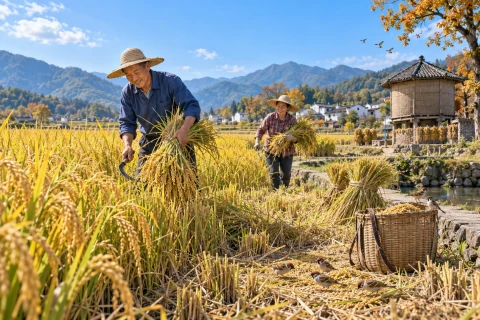
Illustration & cultural context · 图画说明
The story inside the image
Regional rice harvest; astronomical equinox
Rice harvesting, gathered sheaves, and gleaning birds show autumn work in some rice-growing regions. The September equinox is an astronomical event with roughly balanced day and night. The harvest scene illustrates seasonal life without setting a nationwide harvest date.
中文 · 为什么这样画
秋分,把昼夜之分与秋收相连
收割稻谷、搬运稻束和拾穗鸟展示部分稻作地区的秋忙。秋分本身是天文分点,昼夜长度大致接近;金黄稻田是用于解释季节生活的选景,不应说秋分就是全中国统一的收割日。
An editorial interpretation of regional farming, traditional phenology, or local custom. This is a generated illustration, not a documentary photograph or a forecast for every place.
Educational guidance for adults, not a diagnosis or a substitute for clinical assessment.
Bring the idea into your day
Make the new weekly timetable workable
Work, study or family commitments may change around this time. Put your main meal and opportunity for sleep into the plan together.
- Map one workday. Start with the time you need to get up. Mark a realistic evening interval for finishing responsibilities and settling down.
- Place the main meal. Choose when food will be available before the late rush. A familiar prepared component can make a busy evening easier.
- Share the plan. Agree one task handover at home, or set a stopping point for optional messages if you live alone.
How this term differs, review & sources
This point in the season. White Dew dealt with temperature changes within a day. Autumn Equinox arranges the weekly workload; Cold Dew next makes recurring comfort adjustments easier to keep.
Review after a week. Which evening demand still pushed food or rest late? What task could move earlier or be shared next week? A week is a convenient time to review what fits your life.
Traditional reading · Suwen · Chapter 2 · 四气调神大论篇第二
早卧早起,与鸡俱兴。使志安宁。
Editorial translation. Retire early and rise early, rising with the chickens; keep intention peaceful.
The autumn passage connects daily rhythm with settling the spirit. Its historical daylight references are read alongside present work, family life and local conditions.
Application today. These practical suggestions, meal examples and environment choices are contemporary editorial applications of this seasonal framework.
Read the seasonal source context →Modern sources and their scope. Meal combinations, clothing arrangements and term-by-term emphasis are editorial examples.
- NHS · Insomnia. Regular waking, a quiet transition and a comfortable sleep setting.
- NHS · The Eatwell Guide. Varied food groups across the day or week; individual dietary needs still apply.
Sources checked 2026-10-09. Match meals, fluids and activity to any existing care plan.
The Chinese calendar marks this term worldwide. Your local season and care priorities may differ. Your selection stays on this page.
Read the wider autumn-care framework
Daily seasonal care · 秋 · 收
Gather a steady rhythm; care for moistening
Classical reasoning. The autumn passage joins earlier retiring with keeping intention peaceful and gathering the spirit. The traditional Lung–metal association adds attention to breathing and moistening as conditions become drier.
Sleep & rhythm
Make evenings more consistent as schedules change. Arrange adequate sleep around work and caregiving, with fewer unnecessary late demands.
Movement & recovery
Keep familiar moderate activity, adapt clothing to changing temperatures, and allow a gradual beginning and ending.
Food & fluids
Keep meals varied and fluids regular. Familiar soups, cooked vegetables and fruit can provide comfortable food choices in dry conditions.
Mind & emotions
Reduce one unnecessary commitment while keeping supportive contact. Gathering can mean directing attention toward fewer worthwhile things.
Present-day applications of the seasonal framework. Match them to actual conditions, your daily needs and any existing care plan.
Read the complete seasonal guide →01 · Nature & astronomy
A turning point in the year.
This term corresponds to an apparent solar ecliptic longitude of 180°. It is one of the six traditional terms associated with autumn. The illustration explores a seasonal cultural scene; it does not determine the astronomical date. Calendar day labels are available for 1901–2099 in UTC+8; exact local transition times are not displayed.
02 · Classical reading
Begin with the season.
秋三月,此谓容平。
Editorial translation: “The three months of autumn are called gathering and balance.”
This is a passage about the broader season, not a prescription specific to Autumn Equinox. Read our short four-season guide for the main ideas, and adapt daily care to your actual conditions.
Read the seasonal source cardThe reasoning behind a choice.
Feeling unwell? Find the right kind of help →
Connect this season with yang qi, dampness and digestion, yin and fluids, food, and tool suitability. Use the season as context, then choose a care direction that fits your current experiences and routine.