Summer · Solar term
Minor Heat
小暑
Reduce unnecessary heat load
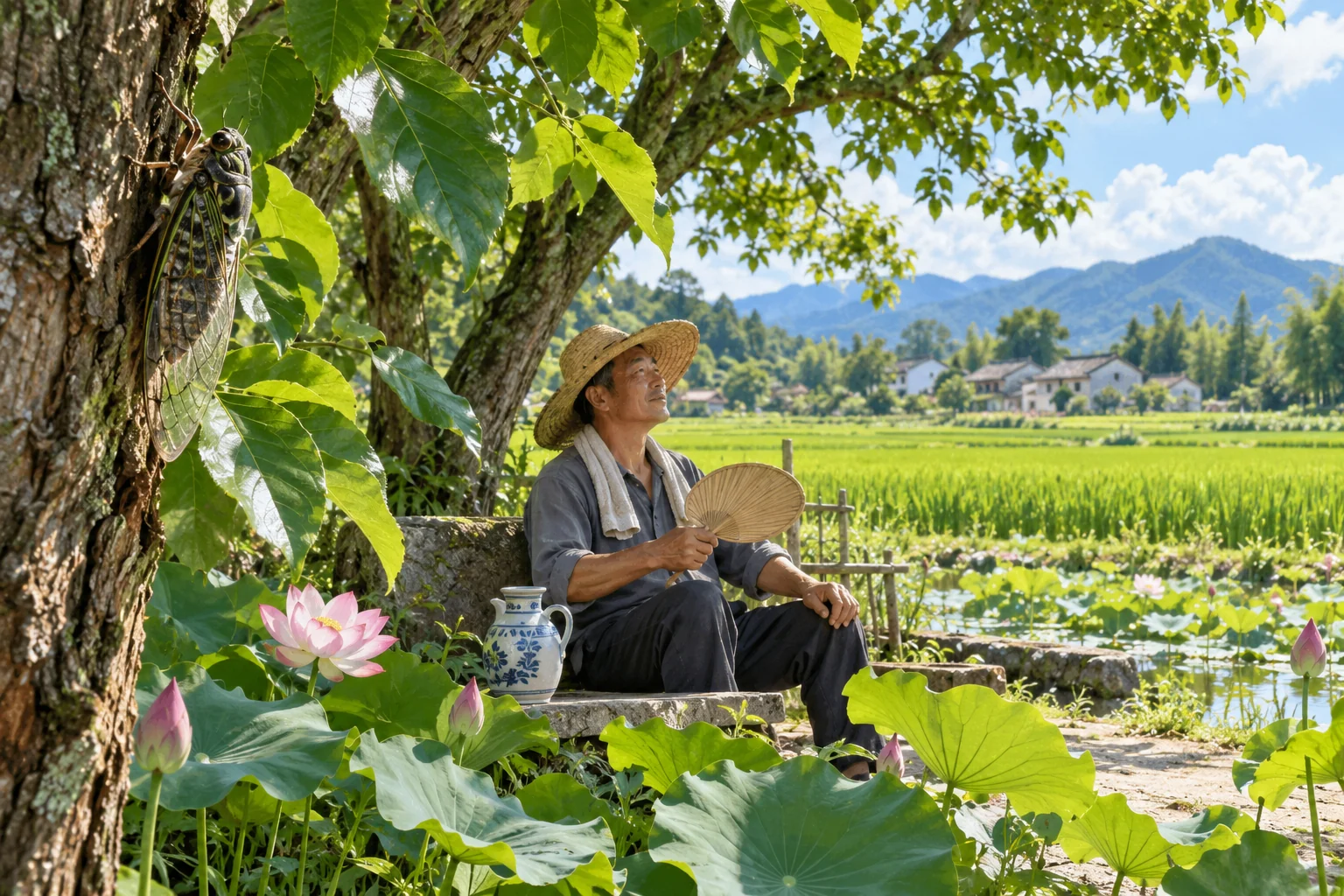
Illustration & cultural context · 图画说明
The story inside the image
Regional midsummer nature and daily rhythm
A cicada, leafy shade, lotus, and a resting farm worker express the growing heat of summer. Cicada activity varies by species and locality. Rest is shown as part of everyday work, not as an individual health prescription.
中文 · 为什么这样画
小暑,蝉鸣与树荫下的停歇
树干上的蝉、浓荫、荷叶与农人的休息共同表达暑热渐盛的夏日。蝉的出现取决于种类、地区与天气,图中是自然观察的代表性意象;休息表现劳作节奏,不是给所有人制定同一种养生方案。
An editorial interpretation of regional farming, traditional phenology, or local custom. This is a generated illustration, not a documentary photograph or a forecast for every place.
Daily seasonal care · 夏 · 长
Allow activity while protecting rest and fluids
This term’s practical focus · Editorial application
Reduce unnecessary heat load
If the weather is hot, reduce activity intensity when needed and take breaks. Choose ordinary fluids and meals rather than strong warming products or sweat-driven detox routines.
Classical reasoning. The summer chapter describes flourishing, emotional openness, and activity within a longer day. The spring–summer emphasis on nourishing yang does not mean deliberately overheating the body.
Sleep & rhythm
Maintain sufficient sleep even when daylight lasts longer. Keep the sleeping space comfortable and avoid using late evenings to accumulate sleep debt.
Movement & recovery
In hot weather, choose cooler hours or a suitable indoor space, reduce intensity when necessary, and pause rather than push through heat-related dizziness.
Food & fluids
Keep meals regular and varied, and have drinking water available. Follow any prescribed fluid restriction; do not replace meals with juices or herbal drinks.
Mind & emotions
Enjoy company if it suits you, with quiet intervals. A busy social calendar is optional, not an obligation to match the season.
Contemporary daily-care applications, not a prescription unique to this solar term. Adjust to actual conditions and any existing care plan.
Read the complete seasonal guide →01 · Nature & astronomy
A turning point in the year.
This term corresponds to an apparent solar ecliptic longitude of 105°. It is one of the six traditional terms associated with summer. The illustration explores a seasonal cultural scene; it does not determine the astronomical date. Calendar day labels are available for 1901–2099 in UTC+8; exact local transition times are not displayed.
02 · Classical reading
Begin with the season.
夏三月,此谓蕃秀。
Editorial translation: “The three months of summer are called flourishing and abundance.”
This is a passage about the broader season, not a prescription specific to Minor Heat. Read our short four-season guide for the main ideas, and adapt daily care to your actual conditions.
Read the seasonal source cardThe reasoning behind a choice.
Feeling unwell? Find the right kind of help →
Connect this season with yang qi, dampness and digestion, food, and tool suitability. A calendar label alone does not establish a pattern or justify a treatment.